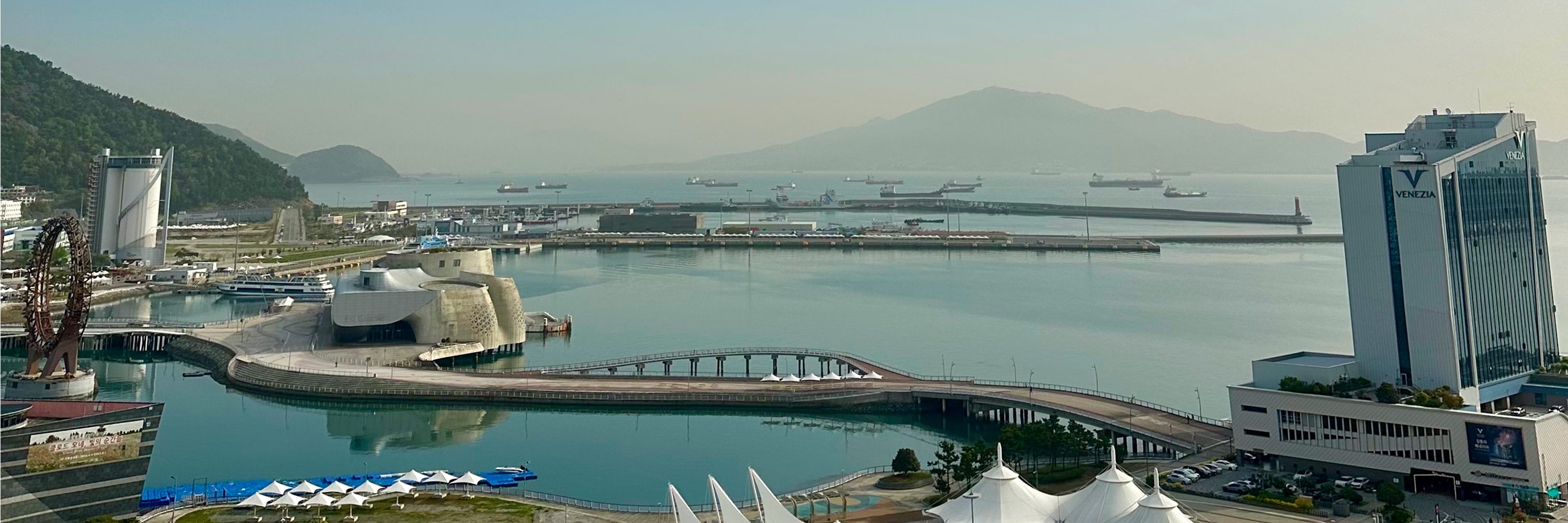
Yeosu — whose name literally translates to "beautiful water" in Korean — is a city known for its beautiful scenery, fresh seafood, and for having hosted the 2012 World Expo. It is also the heart of Korea's largest petrochemical industry.
The wider Gwangyang Bay area, which Yeosu is part of, is home to POSCO's Gwangyang Steel Mill - the largest integrated steel plant in the world, responsible for around 40-45 Mt of greenhouse gas (GHG) emissions per year. Between April 20-25, 2026, this very city became the hub for two concurrently running international climate gatherings: UNFCCC Climate Week 3 and the Korea Green Transformation (K-GX) International Week.
As Team SFOC moved between the two, we were granted glimpses of what to expect from key multilateral actors ahead of November’s COP31 in Antalya, Türkiye. These included the evolving priorities of the Turkish and Australian presidencies as the world attempts to navigate the energy crisis around the Strait of Hormuz, how industry actors are approaching decarbonization and Korea’s own ambitions in the current context.
Here, we share our reflections from Yeosu, where preliminary discussions around COP31 and Korea's expected K-GX unfolded side by side.
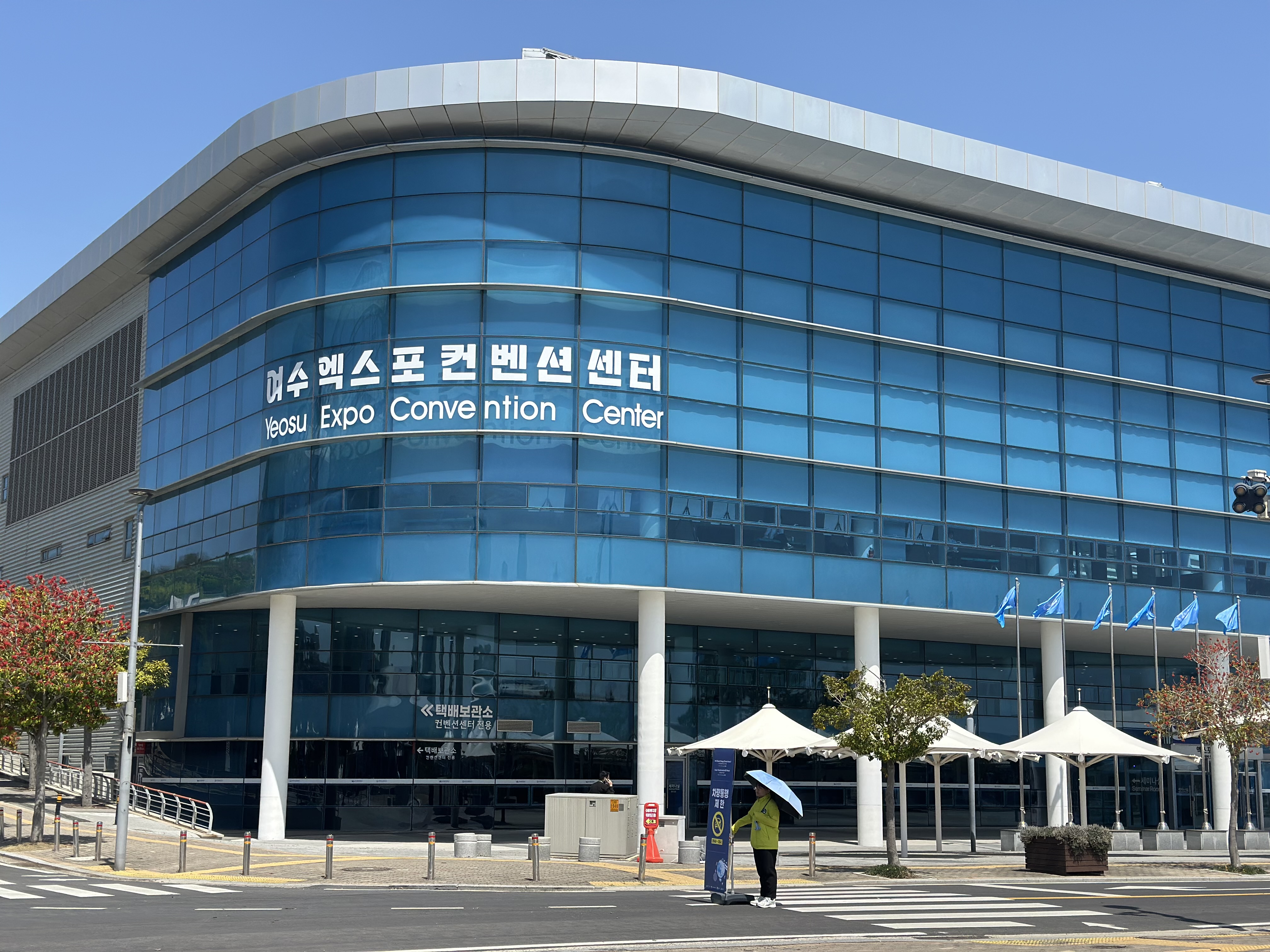
On the Ground in Yeosu: The Implementation Forum and SMART Patches to the Delivery Gap
Throughout the week, one word was on everyone's lips, a word that set the tone for everything that followed: implementation.
The UNFCCC’s Implementation Forum was meant to kick off the conversation on the different pillars of the Action Agenda, the non-negotiated track of the UNFCCC that mobilizes civil society, businesses, and cities to accelerate climate solutions. The aptly named forum aimed to highlight how implementation of the Action Agenda could help foster actionable initiatives for green transition across specific sectors, covering mitigation, adaptation, finance, technology, and capacity-building.
It is worth noting that the Yeosu Climate Weeks overlapped with two other significant international climate events: the Petersberg Dialogue in Berlin (April 21-22) and the Conference on Transitioning Away from Fossil Fuels (TAFF) in Santa Marta (April 24-29). The current oil crisis also compounded the low turnout at the much-anticipated UNFCCC Climate Week 3. There was a visibly stark contrast in attendance levels – while K-GX sessions were packed, UNFCCC sessions were less than half full.
Ambition aside, whether the Implementation Forum managed to truly move beyond surface-level discussion on the challenges it set out to tackle is another question entirely. While everyone agreed on the urgency of moving from pledges to implementation and action at scale, a clear path on how to actually get there remained elusive, with most official interventions staying at a high level of generality, offering vision without much in the way of concrete solutions.
As to whether many of the proposed strategies were SMART – that is, specific, measurable, actionable, relevant and time-bound?
The short answer, more often than not, was no.
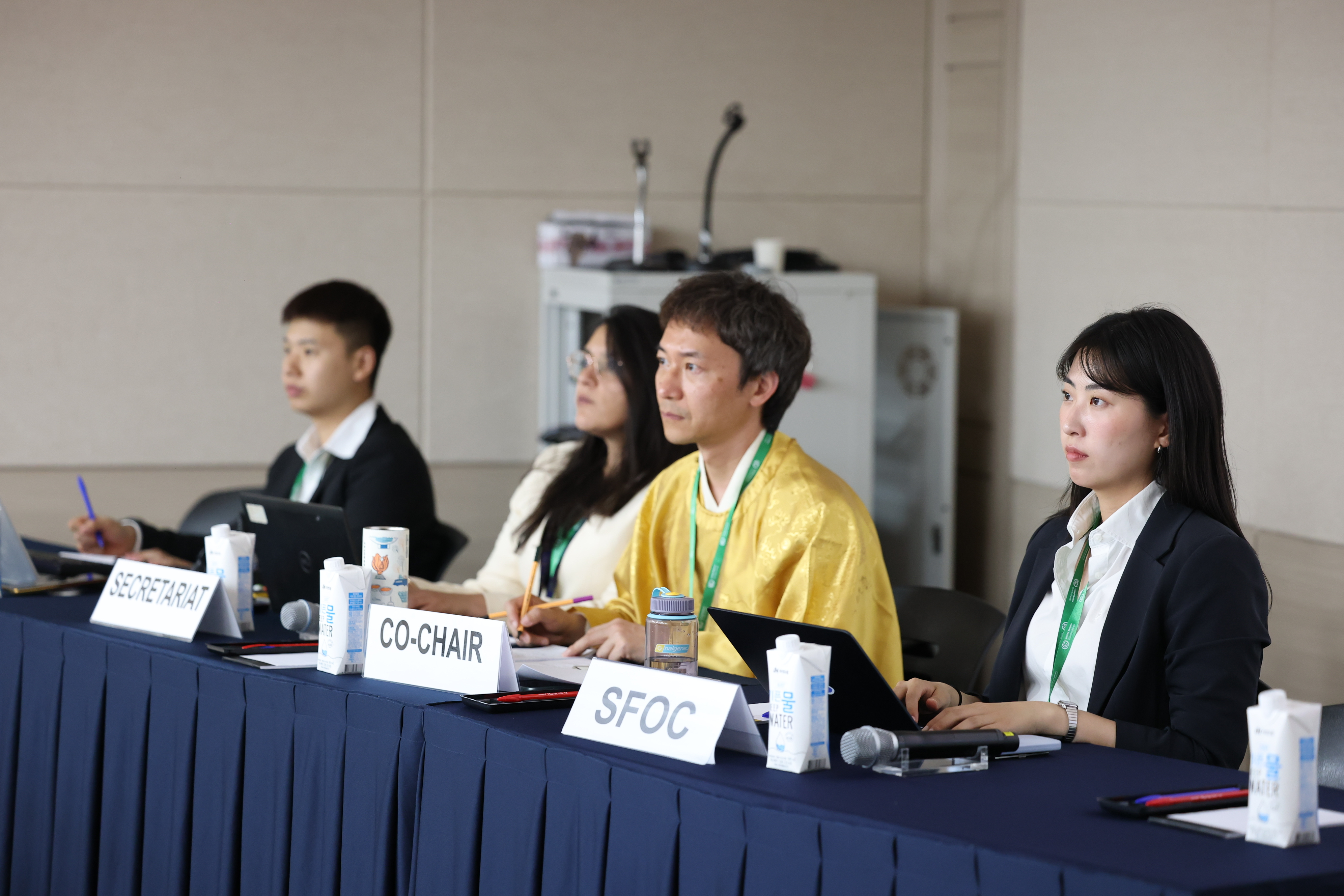
From Pledges to Implementation
Perhaps as a way to signal a stronger commitment to post-COP30 two-tier multilateralism this year, the open section of the UNFCCC Climate Week 3 centered on implementation –- an attempt, yet again, to bridge the gap between the formal intergovernmental process and real-world action on the ground. Eyes were on Türkiye, eager to predict how the forum’s outcomes would influence its incoming COP31 Presidency as a country whose economy remains heavily reliant on hard-to-abate industries.
The issue of access to actionable finance to close the implementation gap kept surfacing throughout the week, raised by Least Developed Countries (LDCs) and Small Island Developing States (SIDS), the two groupings most in need of adaptation finance and support. Türkiye’s proposed response is a country-led implementation mechanism that would aggregate, standardize, de-risk and help finance mitigation and adaptation priorities at scale. Whether this mechanism will be bankable and credible enough to attract the full range of market players (consumers, investors, corporates, and governments) remains to be seen.
What was also clear to see is that there is no ‘one-size-fits-all' when it comes to climate action, but that climate narratives still aren’t being tailored to the people who need to act on them. Market players are ultimately bound by profit. For governments, the frame is national security and energy independence. For finance actors, it’s stranded assets, balance of payment, and geopolitical risks. For the public, it’s health, economic security, and safety. For corporate entities, it is a competitive edge that will decide winners and losers. None of these insights are new; yet little of the forum’s framing actually spoke to incorporating these tailored approaches.
Looking Forward
When it comes to time-boundedness, the stakes could not be higher. With the second Global Stocktake (GST) slated for COP33 in 2028, the window between now and Antalya is a short one requiring critical accountability. The Turkish and Australian presidencies will need to work in close coordination to deliver concrete progress not just on the mandated negotiation tracks, but on the Action Agenda to be announced at the June Climate Meetings (SB64) in Bonn in just over a month. Key themes are already taking shape, with expected emphasis on zero waste, electrification, grid, green industrialization, and advancing finance at scale.
If nothing else, the outcomes of Yeosu’s climate weeks reveal the Action Agenda may carry greater weight than the traditional negotiations dominating the UNFCCC process. It will be worth watching closely what the Turkish-Australian COP31 Presidency will make of this, especially how Türkiye will tackle the decarbonization of the sectors it relies on most. Whether the green industrialization axis will go beyond vague toplines and promises and lead to actionable solutions or follow the pattern of ambitious framing without concrete follow-through will repeat itself in Antalya will be a matter of political will – one that must be closely monitored.
About UNFCCC Climate Weeks and the K-GX International Week
Since 2025, UNFCCC Climate Weeks have been revamped to build momentum ahead of Conference of the Parties (COP) and facilitate dialogue among the relevant actors in the region. Twice a year, the Climate Week brings together Party representatives and non-party stakeholders in a space that combines mandated closed-door meetings with open policy dialogues – bridging the intergovernmental process with the practical realities of implementation on the ground. The two previous Climate Weeks were held in Panama City and Addis Ababa. This year, Climate Week 3 took place in Yeosu (April 21-25), with Climate Week 4 set to take place in Baku, Azerbaijan (September 7-11).
The inaugural K-Green Transformation (K-GX) International Week was organized by Korea's Ministry of Climate, Energy and Environment (MCEE). K-GX, Korea’s Green Transformation strategy, is South Korea’s framework for restructuring its industrial and energy economy around low-carbon growth. Under the slogan Green Transformation: A Path of Prosperity for All, it focused on the future of industry – how to decarbonize it and find sustainable pathways for innovation.
About the Authors
Damya Kecili and Yena Seong are members of SFOC's Diplomacy team, covering Fossil Fuel and Heavy Industry-related workstreams.


