
In This Edition:
57 countries convene in Santa Marta for the inaugural TAFF Conference, pushing for concrete action on fossil fuel phaseout outside the UNFCCC framework.
Legal accountability for climate inaction gets new teeth as UN resolution endorses ICJ Advisory Opinion on Climate Change, though key provisions did not make the final cut.
A gridlocked SB64 leaves COP31 negotiations starting from scratch on adaptation, finance, and mitigation, raising fresh doubts about the UNFCCC’s ability to close the implementation gap.
On May 16, 2026, climate scientists officially retired the “worst-case scenario” otherwise known as RCP8.5, a model predicting a tripling of CO2 levels and average global temperatures of around 4.5°C hotter than pre-industrial levels by the year 2100. The announcement is sobering proof that the 1.5°C scenario remains out of reach —but also welcome evidence that global climate efforts, however delayed and insufficient, are making a real difference.
Entering the second half of 2026, similar signals of change are emerging across the globe. Renewable energy capacity is at an unprecedented high. Supply shocks like the Hormuz blockade are strengthening the case for a long overdue transition away from a fossil fuel-based approach to both energy security and economic development. Countries are joining forces to make the progress the UNFCCC framework seemingly cannot, doubling down on establishing legal consequences for climate inaction in the process.
In short, progress is happening, but there’s far more still to be done; the outcomes of this year’s June Climate Meetings (SB64) in Bonn are proof of such. What happens in the coming months will determine what progress is made at COP31, where countries will continue efforts to close the implementation gap plaguing the UNFCCC system in the face of dwindling faith in climate multilateralism.
In this ACS half-year recap, we take stock of the major developments reshaping the global climate conversation and discuss their implications for upcoming negotiations and climate progress across the Asia-Pacific.

Momentum Builds
Six months into 2026, the word dominating global climate circles is momentum. In the trenches of a longstanding implementation crisis, resource conflicts and extreme weather events are building pressure to make sure existing pledges and commitments are translated into concrete action. This pressure has intensified in the wake of COP30, where a shaky consensus watered down a highly anticipated binding decision on fossil fuel phaseout. Yet, out of that disappointment, a new shape of multilateralism began to emerge. This new two-tier approach is gaining traction as frontrunners seek to overcome the limitations of the traditional UNFCCC system. This year’s June Climate Meetings (SB64) took place amid a transition characterized by emerging coalitions of the willing convening their own spaces—in pursuit of realizing implementation which overrides national interests.
Actioning a Fossil Fuel Phaseout in Santa Marta
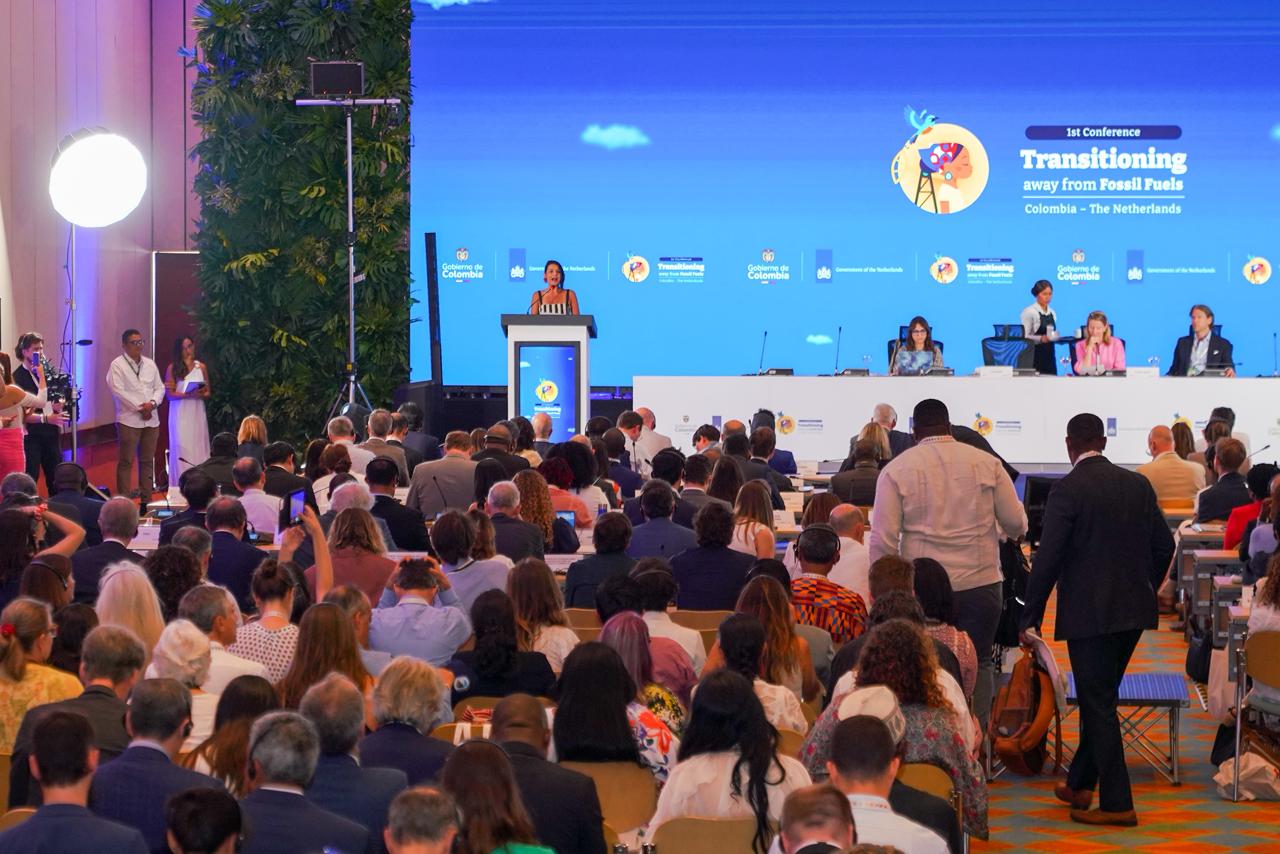
April was a busy month for global climate negotiations both in and outside of the UNFCCC process, with UNFCCC Climate Week 3 overlapping with the widely anticipated First Conference on Transitioning Away from Fossil Fuels (TAFF). 57 countries representing around a third of global GDP flocked to Santa Marta, Colombia from April 24-29 for the latter, setting out to make good on COP28’s landmark commitment to a just and equitable transition away from fossil fuels.
The Santa Marta conference set out with a clear, distinct goal: action. Foregoing the lose-lose battle for consensus and tedious target-setting, it served as a gathering of a like-minded coalition emerging from the ashes of COP30, where language on fossil fuel phaseout failed to make it to the final decision text. Stripped-down, direct dialogue among governments, civil society, and the private sector was largely geared towards operationalizing existing commitments under the Paris Agreement, with emphasis on strengthening global climate governance both in and outside of the UNFCCC framework. Key discussions explored the economic factors driving fossil fuel dependence, as well as how to transform supply and demand to build cleaner, more resilient energy systems.
The TAFF conference concluded with the launch of three concrete workstreams: roadmaps, macroeconomic and financial architecture, and producer-consumer alignment, aiming to address the gaps delaying progress towards a full fossil fuel phaseout. Parties also established the Science Panel for the Global Energy Transition (SPGET), designed to help countries build out and implement functional transition roadmaps aligned with the 1.5°C target. The newly formed permanent coordination group will ensure continuity between future TAFF conferences, with outcomes playing directly into wider global climate processes.
Industrial Decarbonization and Economic Competitiveness Dominate Climate Week 3
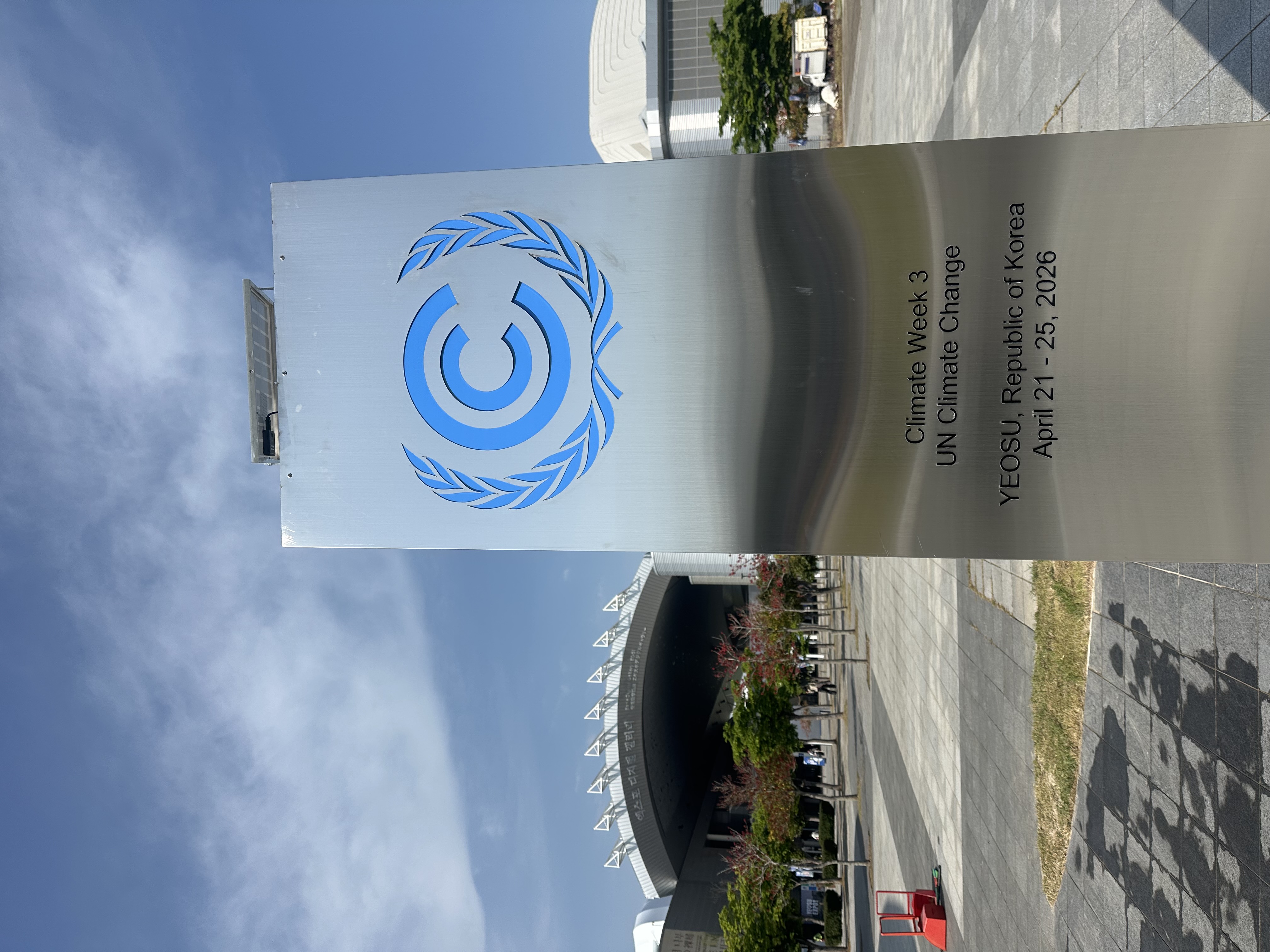
Running concurrently with the Santa Marta conference, UNFCCC Climate Week 3 unfolded in South Korea’s coastal city of Yeosu, with major talks taking place during the two-day Implementation Forum. It coincided with the Korean government-hosted K-Green Transformation (K-GX) International Week, conducted under the theme Green Transformation: A Path of Prosperity for All, and meant to promote the country’s industrial decarbonization and transformation strategy.
Central to Climate Week 3 was mobilizing the Action Agenda, the non-negotiated track of the UNFCCC meant to strengthen local action across thematic tracks including adaptation, finance, and capacity-building. Among key discussions was the issue of actionable finance for countries most exposed to climate change, as well as how to align on implementation amid competing priorities of energy security, economic competitiveness, and climate justice. The overarching takeaway? The countries best positioned to decarbonize while remaining industrially competitive will be those primed to reshape the global economy.
The Call for Legal Climate Accountability Gains New Teeth
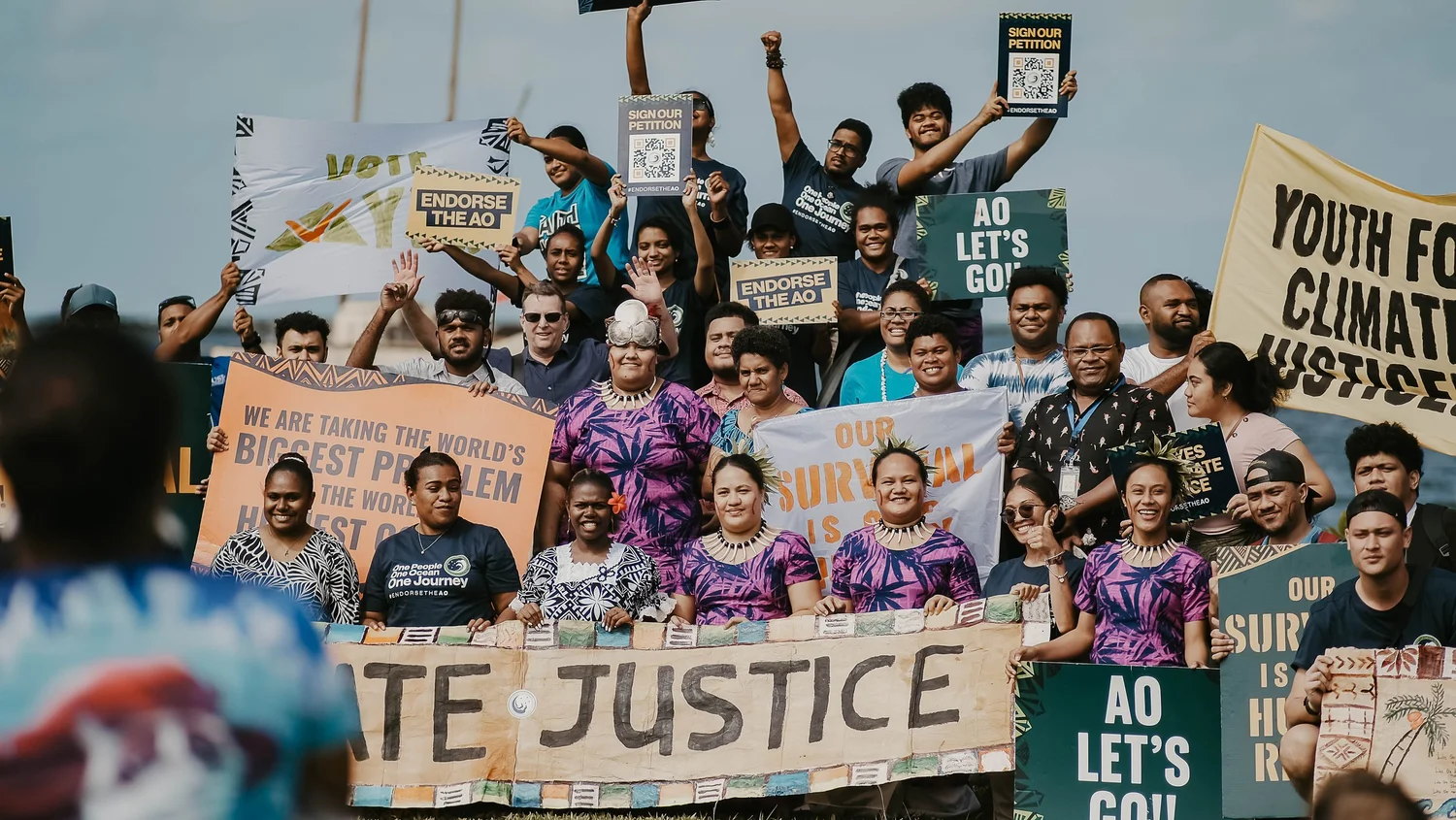
On May 20, 2026, the UN General Assembly passed a resolution endorsing the International Court of Justice’s July 2025 Advisory Opinion on Climate Change. The vote was split 141:8 with 28 abstentions, further strengthening the Pacific island state of Vanuatu-led call for an international, legally binding framework holding states accountable for mitigating and responding to the climate crisis. While significant, avoiding a stalemate meant the resolution’s final text was stripped of two key elements of Vanuatu’s zero draft: an explicit call for an accelerated fossil fuel phaseout and a proposed international registry for climate-related losses and damages that would have helped operationalize the Loss and Damage Fund. Though watered down by the need for consensus à la COP30, the resolution doubles down on states’ legal responsibility to prevent climate harm. The UN’s task now will be to create a concrete accountability mechanism that ensures these obligations are upheld.
Gridlocked SB64 Paints Bleak Outlook for COP31
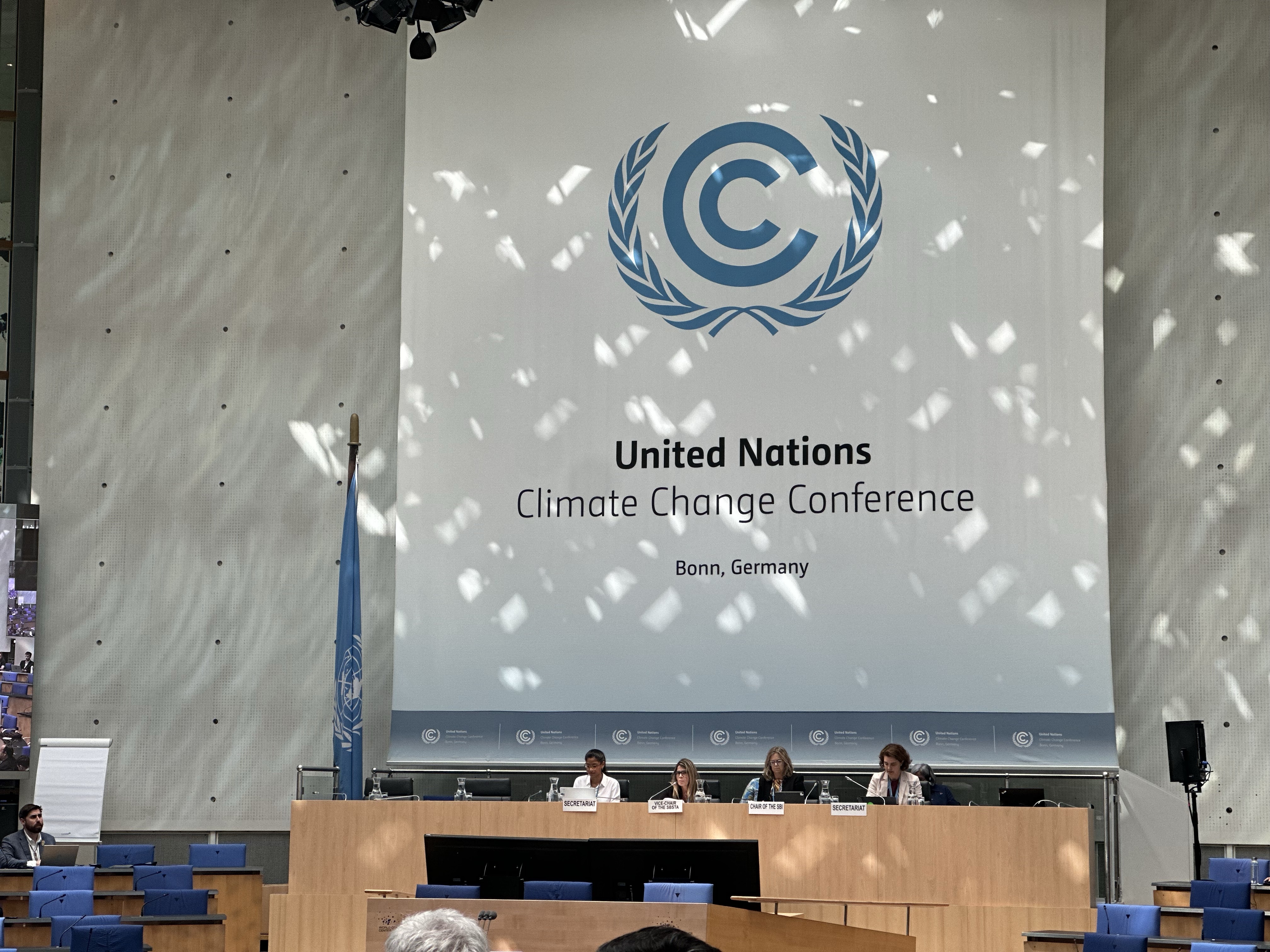
Addressing the UNFCCC’s implementation deficit was meant to form the crux of this year’s midpoint negotiations, which took place in Bonn, Germany from June 8-18, 2026. Adaptation, finance, and mitigation were high on the SB64 agenda as delegates gathered to identify key priorities for COP31, which doubles as the starting point of the second Global Stocktake (GST 2.0) set to conclude in 2028. Despite early adoption of the agenda, the mid-year talks eventually fell into a familiar gridlock over adaptation financing for developing countries, pushbacks against climate science, and how to properly operationalize the Transition Away from Fossil Fuels (TAFF) roadmap.
The Highs
The incoming Türkiye-Australia COP31 joint presidency took the opportunity to introduce its enhanced Action Agenda, including a new electrification target aimed at scaling up the share of electricity-driven global energy consumption to 35% (up from today’s ~20%) by accelerating electrification across transport and industry. While welcomed by those present, civil society cautioned that any electrification goal must be backed by an actionable pathway to phasing out fossil fuels and scaling up renewable energy capacity.
SB64 saw notable progress on just transition, with negotiations successfully delivering a text aimed at operationalizing the Belém Antalya Mechanism (BAM), designed to help countries integrate just transition principles into their climate plans, spanning climate finance delivery, equitable implementation, and economic diversification. The midyear talks also saw the launch of the Global Implementation Accelerator, a new presidency initiative meant to speed up progress on “high-impact” Action Agenda initiatives alongside the Belém mission to 1.5C, geared towards implementing countries’ National Adaptation Plans (NAPs) and Nationally Determined Contributions (NDCs).
The Lows
Elsewhere, Bonn talks broke down along predictable lines. The sour aftertaste of COP30 leached into discussion rooms, sparking heated debates UNFCCC chief Simon Stiell described as “a familiar tendency towards you-first-ism” that left little room for compromise, let alone consensus. Discussions on implementing the TAFF roadmap were deeply divided along developed and developing country lines, with carbon pricing and other market-based approaches up against longstanding calls for an overhaul of global financial architecture. These cleavages were exacerbated by allegedly “coordinated attacks” on climate science by fossil fuel interests which sought to undermine the 1.5°C target and the Paris Agreement altogether.
Belém’s hotly contested decision on progress indicators for the Global Goal on Adaptation (GGA) faced a similar stalemate in Bonn. Developed countries’ hardline stance against tripling adaptation finance became the breaking point for a growing coalition of climate-vulnerable countries, ultimately delaying the launch of a GGA taskforce until COP31.
The Rocky Road Forward
SB64’s outcomes are little surprise to those acquainted with what has become a concerningly accepted breakdown in the UNFCCC system, its effectiveness restricted by its very character. National interests have persisted in overshadowing what should be a collective effort to address the reality of a climate crisis growing more severe each year, with billions of lives hanging in the balance. Debates that too often devolve into semantics misdirect energy towards securing a clean-cut consensus on the how of implementing climate action, stifling any meaningful, albeit fragmented, progress in the process.
The lack of progress in Bonn means COP31 discussions on several key areas will essentially start from scratch, snatching up valuable negotiations time better spent on pressing issues. For those most vulnerable to climate change, including SIDS like pre-COP hosts Fiji and Tuvalu, these are delays they can ill-afford, especially amid predictions of a “super” El Niño set to drastically alter global weather patterns this summer.
What happens between now and November will play a crucial role in whether COP31 can begin to close the glaring delivery gaps its predecessors have left behind. As consensus drifts further out of reach, it is coalitions of the willing, like those witnessed in Santa Marta and the halls of the ICJ, that now form the bedrock of climate action—pushing for progress where formal processes have stalled.
With just two years left before GST 2.0, the UNFCCC’s performance hinges on its ability to realize efforts on RE expansion, improving energy efficiency, industrial decarbonization, and transitioning away from fossil fuels, with NDCs likely subject to continued scrutiny. Eyes will be peeled on a series of upcoming formal and informal gatherings aiming to tackle the gargantuan challenge of solving the UNFCCC’s implementation deficit, including July’s High-Level Political Forum on Sustainable Development (HLPF), UNFCCC Climate Week 4 and Climate Week NYC (NYCW) in September, and Bangkok Climate Action Week (BKKCAW) this October.
In a special address delivered during London Climate Action Week (LCAW), UN Secretary-General António Guterres announced a second Heads of State summit during this year’s UN General Assembly, set to advance a just energy transition ahead of COP31 in Türkiye alongside calls for global action on methane and greater transparency on AI’s environmental impacts. Just ahead of COP31, parties will meet in Fiji and Tuvalu for the Pre-COP, where actioning the UN resolution on climate accountability may find its way onto the agenda.
Making the most of these opportunities must be the priority for a growing coalition of like-minded parties seeking to override divisions delaying the urgent work of addressing a worsening climate crisis.
COP33: An Opportunity for the Asia-Pacific
The UNFCCC rotation system will see the Asia-Pacific region play host to COP33, where a concluding GST 2.0 will evaluate whether domestic policies align with international climate commitments and set the course for climate ambition post-2030. With frontrunner India withdrawing its bid last April, the host slot remains open as regional governments wait to see who will step up to the plate.
The COP33 presidency will play a crucial role in shaping the global implementation agenda, especially on electrification and industrial decarbonization, areas in which leading economies like Korea and Japan stand to gain significant comparative advantage. A push for “clean” electrification through fair power systems, low to no carbon feedstock sourcing, and strengthened grid infrastructure could not just reduce domestic emissions but paint a scalable model for others to emulate across and beyond the Asia-Pacific.
Whether Asia’s leading economies will take on the daunting task of turning commitments into action, however, remains to be seen.


