Regional accountability strengthens the Climate Ministry’s first renewable energy plan, but the proposed separation distance decree marks a retreat from earlier reform efforts and risks undermining the plan’s broader objectives.
On May 19, the Ministry of Climate, Energy and Environment (MCEE) unveiled its First Basic Plan for Renewable Energy (the Basic Plan, hereinafter). As the Ministry’s first comprehensive renewable energy strategy since its establishment, the plan presents an ambitious and broadly commendable vision for accelerating the energy transition. However, the proposed amendments to the enforcement decree on solar PV separation distance, which were announced on the same day, mark a retreat from earlier policy discussions. This inconsistency undermines the Basic Plan’s forward-looking vision and warrants reconsideration.
The Basic Plan aims to deploy 100 GW of renewable energy by 2030 and increase renewables’ share of electric power generation to more than 30 percent by 2035. The targets represent an ambitious effort to more than triple renewable energy’s contribution within a decade, from its 9.8 percent share of electricity generation in 2025. The plan is further distinguished as the first statutory renewable energy roadmap established under the revised Act on the Promotion of the Development, Use and Diffusion of Renewable Energy (the Renewable Energy Act), amended in March this year. In both scale and institutional significance, the plan marks several meaningful progresses.
First, the plan establishes clear near-term deployment priorities. Of the 100 GW of renewable energy capacity targeted for 2030, 87 GW has been allocated to solar power, while wind energy is tasked with a longer-term role focused on laying the groundwork for large-scale deployment. This allocation considers time as a critical variable in responding to the climate crisis. Establishing clear priorities in light of that reality is a sound approach.
Second, the plan further details the strategy to deploy renewable energy closer to energy demand centers. It sets out to develop 10 new gigawatt-scale renewable energy projects totaling 12 GW, largely focused on the Seoul metropolitan area and Chungcheong and Gangwon Provinces. It also proposes to prioritize the reuse of large idle sites, including retired coal-fired power plants. This principle of bringing supply closer to demand reflects the reality that energy-intensive advanced industries are concentrated in the capital region.
Third, the plan adopts a different approach to implementation. The minister chairing “Mega-Project Steering Committee Meeting”, the "Working-level Consultative Bodies between the Ministry and Local Governments” established by region, and the institutionalization of a “Central–Local Energy Transition Council” signal a shift from the previous top-down approach, in which the central government largely focused on issuing targets. The ministry’s willingness to engage more directly with local governments and take a more active role in project development merits positive recognition.
Fourth, breaking down the 100 GW target into concrete regional responsibilities is noteworthy. National aggregate targets can easily remain symbolic without clearly assigned accountability, and the plan addresses this gap.
However, the enforcement decree on solar separation distances, preliminarily announced on the same day, warrants reconsideration as it weakens the effectiveness of the plan’s broader strategy. In both 2017 and 2023, the Ministry of Trade, Industry and Energy, which oversaw the energy portfolio prior to MCEE’s establishment, recommended that local governments ease separation distance regulations for solar PV installations. Specifically, it recommended limiting separation distances to 100 meters from residential areas and eliminating separation distance requirements from roads. The rationale was that inconsistent local regulations lacked objective justification, intensified community conflict, and hindered renewable energy deployment. Yet the MCEE has now proposed separation distances of 200 meters from residential areas and 100 meters from roads. In effect, the very ministry tasked with advancing a “100 GW renewable-energy transition by 2030” has proposed standards that reverse recommendations put forward nearly a decade ago by its predecessor agency.
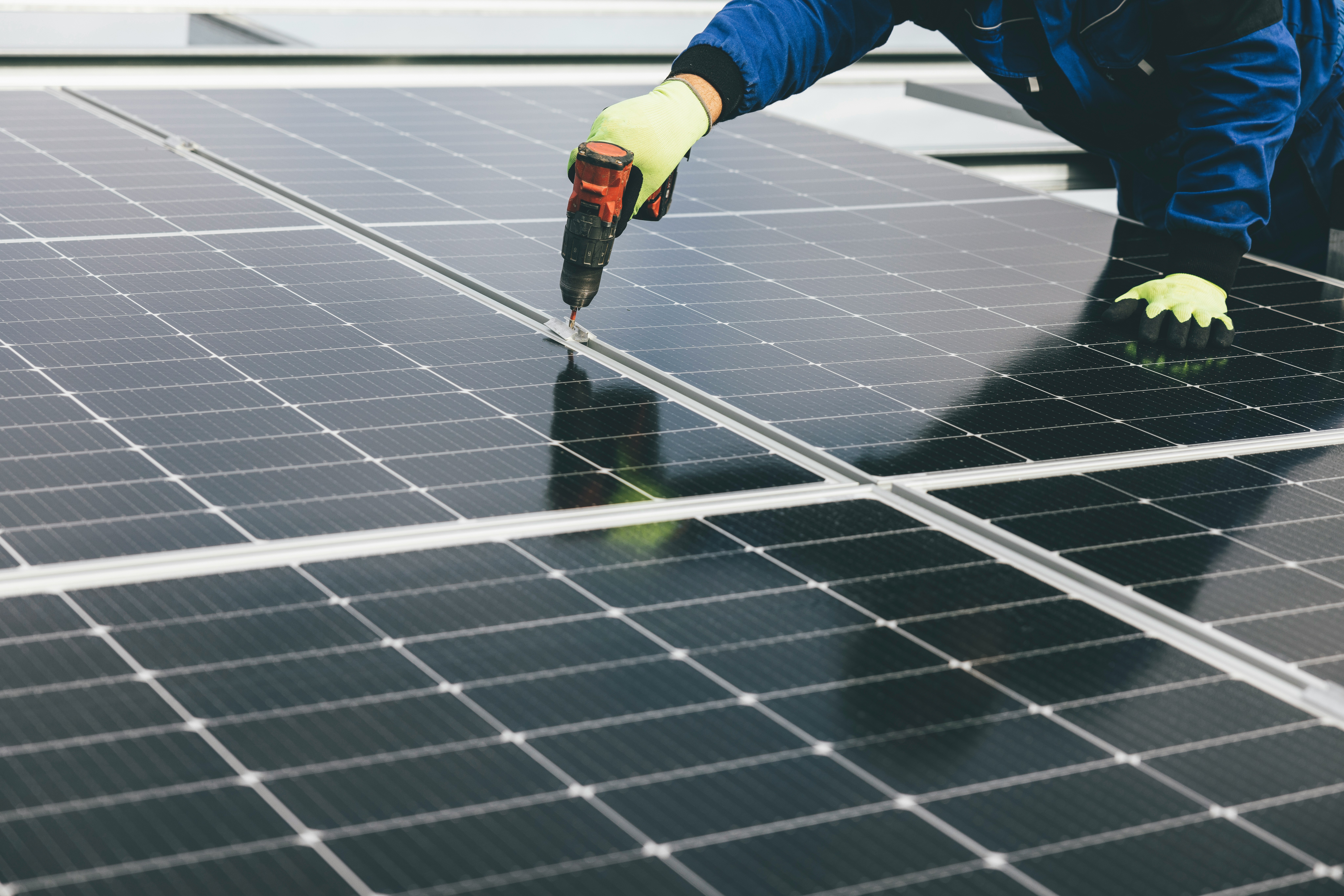
Roadside solar installations offer clear advantages in terms of both land use and grid accessibility. The ministry itself acknowledged this in the Basic Plan by designating roads, railways, and irrigation channels as one of four priority categories for solar deployment through 2030, alongside factory rooftops, agrivoltaics, and floating solar systems. Against this backdrop, reintroducing a 100-meter road separation distance requirement for roads without a clear scientific basis is fundamentally misaligned with the plan’s stated direction and its goal of achieving 100 GW of renewables deployment. Likewise, the residential separation distance set at 200 meters doubles the previously recommended standard but expands the restricted area fourfold in theory.
The proposed enforcement decree is also at odds with the structure of the current legal framework. Article 27-3 of the Renewable Energy Act stipulates that separation-distance requirements are, in principle, not to be applied, while allowing standards to be established by presidential decree only in exceptional circumstances. Against that backdrop, codifying 100-meter road separation distances and 200-meter residential separation distances as general standards effectively runs counter to the principle that such restrictions are to be applied only on an exceptional basis.
Further, the issue extends beyond a single regulation governing solar siting. A policy framework that neither clearly advances the phase-out of coal-fired power nor meaningfully expands the conditions for renewable-energy deployment undermines the coherence of the broader energy transition. The 100GW renewable energy target represents a commitment to rapidly build the capacity needed to replace coal-fired power. Yet, if large areas around roads and residential zones are broadly excluded from solar installations, that commitment risks remaining largely confined to numerical targets.
The MCEE was established to oversee the national challenges of climate action, energy transition, and environmental protection in a coherent and integrated manner. The 100GW deployment target, the allocation of regional responsibilities, and the strategy of bringing renewable energy generation closer to demand centers are all aligned with that mission. For those objectives to be realized in practice, the enforcement decree must reinforce rather than constrain them. If the ministry is to fulfill its founding purpose of reducing dependence on fossil fuels and leading a renewable energy-centered transition, it must remove regulatory barriers that impede renewables deployment. The true significance of establishing an agency dedicated to renewable energy will ultimately depend on whether its policy commitments are backed by enforcement decrees that give them practical effect.
Related insights
Solar Separation Regulations: The Real Problem was Administrative Inaction, Not Distance.
How South Korea Broke a 10-Year Stalemate on Solar Power Expansion
2026-07-31
Advancing the Transition Away from Fossil Fuels
Key Outcomes from Santa Marta
2026-05-29
Green Leadership or Green Lag? South Korea in a Regional Race
South Korea's 2035 NDC
2025-11-18
At a Crossroads: South Korea’s Energy Transition and the Role of Green Finance
From Global Insights to Local Action
2025-10-20

What South Korea’s Next President Must Do to Address the Climate Crisis
SFOC’s 10 Climate Solutions
2025-05-02

South Korean “Green Premium”, Missing the Mark on Global Emissions Accounting Standards
Lack of transparency and credibility undermines renewable energy claims
2025-02-21

Green Premium or Greenwashing?
Understanding South Korea’s RE100 challenges
2024-08-21

Samsung Electronics’ RE100 Ambitions and South Korea’s Yongin Semiconductor Cluster
A model for green tech or an Olympian energy struggle?
2024-08-09


