
What does it actually take to finance the energy transition?
That was the question I took with me to London Climate Action Week 2026 in June. The city-wide gathering, held from June 20-28 provided a platform where governments, financial institutions, businesses, researchers, and civil society came together across hundreds of events to exchange ideas and challenges with one another – this year at a moment shaped by both extreme heat and geopolitical uncertainty.
By the second day of London Climate Action Week, London’s Underground was already warning passengers about heat stress. Walking between meetings in unusually high temperatures of 33°C, it became clear that climate change was no longer just the topic inside conference rooms but something everyone outside was navigating too. Conversations took place throughout a city that was actively heating up, both for the public and those of us moving between think tanks and universities to offices, cafés and meeting rooms across London.
As someone working on coal-to-clean finance and energy transition policy in South Korea, I walked in expecting the typical discussions of green finance, investment targets and net-zero commitments. Instead, I found myself in dialogues that reached far beyond climate finance itself, from electricity grids and public investment to industrial competitiveness, energy security and permitting reform. At first, these topics seemed surprisingly disconnected. Yet as the week unfolded, it became increasingly clear that they were all part of the same conversation.
By the end of the week, this reality cemented the one idea that kept resurfacing across different discussions: climate finance is no longer primarily about finding more money. It is about creating the conditions that turn commitments into actual outcomes for the future.

The Energy Transition as an Investment in Resilience
The first enabling condition discussed throughout the week turned out to be not financial, but strategic: expanding the case for the energy transition beyond climate action to include energy security, economic resilience and industrial competitiveness.
Amid ongoing geopolitical tensions in the Middle East and renewed concerns over global energy markets, there was a clear pattern. Countries that had invested earlier in domestic renewable energy and electrification were proving less exposed to energy price volatility and supply disruptions than those that remained heavily dependent on imported fossil fuels – including import dependent countries like South Korea.
Electrification and energy security emerged as a common thread across conversations that initially seemed unrelated. Whether the topic was transition finance, industrial policy, or permitting reform, the overall message consistently highlighted that renewable energy generation alone is not enough. Building modern electricity grids, strengthening clean electricity infrastructure and creating a stable policy environment that gives investors confidence were presented as equally essential parts of the transition.
For me, this showed how the broader narrative around climate finance is continuing to evolve. Rather than viewing the energy transition primarily from the standpoint of the cost of moving away from fossil fuels such as coal, oil and gas, it is now being framed as a long-term investment in national resilience, economic sovereignty and future competitiveness.

From Climate Ambition to Investment Reality
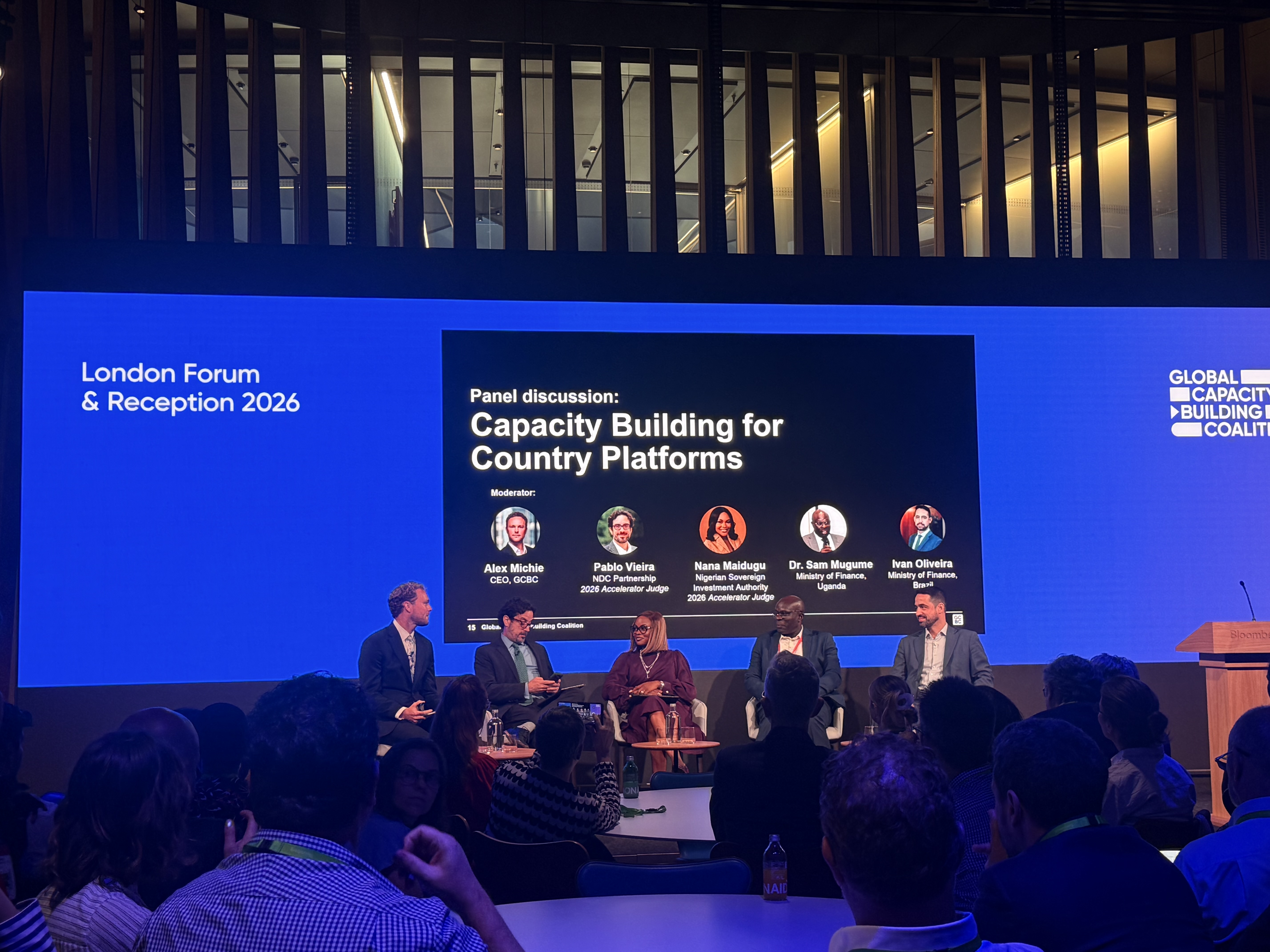
Seeing the energy transition as an investment rather than a sunk cost also changes the conversation about finance itself. A recurring theme throughout different sessions was that capital alone will not deliver the energy transition. Finance can only flow where projects are sufficiently prepared, institutions have the capacity to implement them, and policy frameworks provide long-term certainty. In other words, the current challenge is about figuring out how to turn investment pipelines into investments, and investment into practice. It’s not a matter of whether finance exists, but one of how governments and institutions can turn ambitions into investible projects.
Across discussions on climate and development finance, capacity building was therefore highlighted as not simply a supporting activity, but as implementation infrastructure. South Africa’s Just Energy Transition Partnership clearly illustrated the difference between committed finance and deployed finance, highlighting that only around 45% of pledged funding is reaching energy transition projects that can actually be implemented. This demonstrates the need to shift focus from securing financial commitments to ensuring that projects are investment-ready.
Governments are Back to Unlock Markets
If the main challenge is no longer raising finance but turning investment into implementation, the next question naturally becomes who is responsible for creating the conditions that make that possible.
The answer emerging across London was very consistent: the onus is on governments to create an enabling environment that translates investment into impact. Rather than replacing private investment, their role is to reduce risk, provide long-term policy direction and create the confidence needed for private capital to invest at scale.
Although countries are taking different approaches, many are converging around a similar principle. Japan's Green Transformation (GX) strategy combines public finance instruments, sovereign green bonds and gradually evolving policy incentives to mobilize investment in the transition. Shortly before London Climate Action Week, Australia issued its largest sovereign green bond to date, aimed at financing areas such as electricity grids, climate mitigation and nature, and attracting strong interest from international investors—including those from Japan and South Korea. In the UK, discussions frequently highlighted the role of public finance institutions and the country's evolving transition finance framework in supporting investment while remaining adaptable as technologies, markets and policy needs continue to evolve.
Though each country’s specific instruments differ in detail, they share a common goal. Public finance is increasingly being used to absorb early risks, establish long-term policy stability and encourage private investment by making markets work rather than replacing them.
What London Climate Action Week Reveals About Korea’s Role in the Global Energy Transition
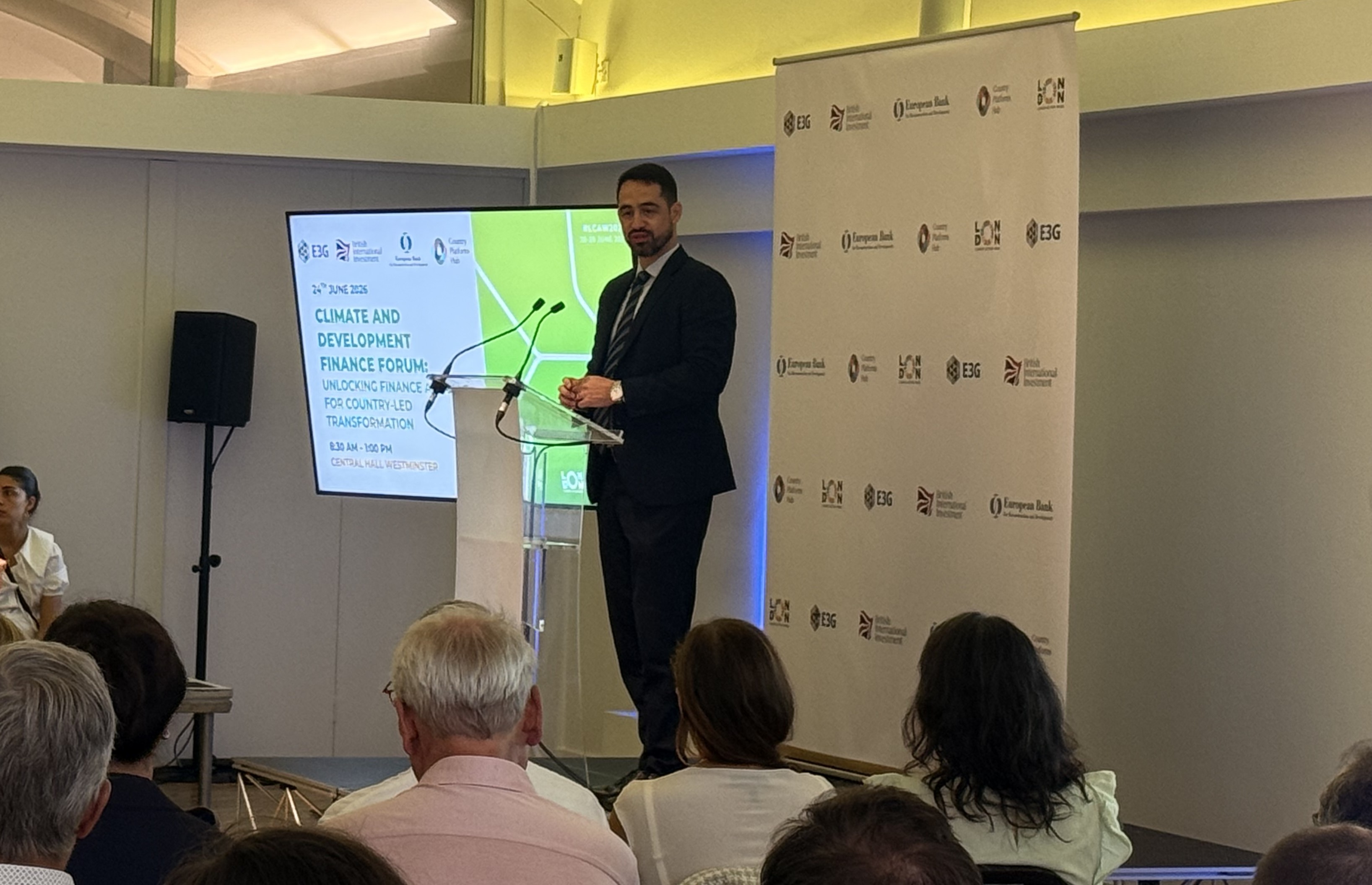
One particular insight from the week’s events stood out to me when it came to South Korea. Although relatively few Korean participants were present in many of the finance and policy sessions I attended, the country itself was a frequent topic of discourse.
Whether conversations focused on industrial competitiveness, transition finance, manufacturing or public finance institutions, questions about Korea came from financial institutions, think tanks and civil society organizations alike. Participants were interested in how financing decisions are made, how energy transition policies interact with industrial strategy, and how Korea intends to navigate the transition of one of the world's most energy-intensive manufacturing economies. At the same time, Japan maintained a particularly visible presence across many finance discussions, while China increasingly introduced its own approaches to industrial transition and transition finance. Taken together, these conversations showed that international interest in Korea's energy transition is growing, not only because of the country's climate ambitions, but because its transition will have implications far beyond its own borders.
This growing interest also comes at a time when Korea is entering an important new phase of its own transition finance agenda. Over the past year, the government has joined the Powering Past Coal Alliance (PPCA) while committing to phase out unabated coal power by 2040, begun preparing Korea's Green Transformation (K-GX) strategy, advanced work on a Transition Away from Fossil Fuels (TAFF) roadmap, and announced plans to issue sovereign green bonds. While each initiative addresses a different aspect of the transition, together they signal a broader shift from setting transition ambitions to building the policy and financial architecture needed to mobilize investment at scale.

Looking back, one of my most valuable takeaways from London Climate Action Week was seeing these developments not as isolated policy initiatives, but as interconnected pieces of a broader transition finance agenda. Around the world, governments seem to be moving beyond setting climate targets towards building the institutions, financing mechanisms and policy certainty needed to implement them. Seen through that lens, Korea’s recent transition finance agenda demonstrates that developing new financial instruments is only one part of the challenge. Equally important will be creating the policy and regulatory environment that gives both domestic and international investors confidence in the long-term direction of the energy transition. This includes strengthening market frameworks, expanding grid infrastructure, and ensuring that green/transition finance consistently supports the shift from coal and other fossil fuels towards renewable energy.
As Korea prepares for upcoming international gatherings including APEC 2026, COP31 and the G20 in 2028, it has an opportunity not only to learn from international experience, but also to contribute its own perspectives to the evolving global discussion on coal-to-clean transition finance. By the time I left London, I realized that the answer to the question I had brought with me was much more complex than I had expected. Financing the energy transition ultimately depends not only on mobilizing capital, but on creating the policy, institutional and strategic conditions that allow investment to translate into a credible coal-to-clean transition. For Korea, that means ensuring that its growing transition finance agenda is matched by the policy direction, market frameworks and implementation needed to turn promising commitments into tangible progress.
About the Author
Ayleen Lippert is an Energy Finance researcher in SFOC's Climate Finance Team, where she focuses on the role of public and private financial systems in accelerating the coal-to-clean transition in South Korea. Her work examines how financing structures—such as sovereign green bonds, carbon pricing, and public financial institutions—can mobilize capital for large-scale decarbonization while supporting a just transition for affected regions and communities.
Related insights
Advancing the Transition Away from Fossil Fuels
Key Outcomes from Santa Marta
2026-05-29
At a Crossroads: South Korea’s Energy Transition and the Role of Green Finance
From Global Insights to Local Action
2025-10-20

No New Bonds, But No Justice Either
KEPCO’s harm crosses borders. Its financiers have a choice to make.
2025-07-16

Green Promises, Dirty Money: The Silent Support Behind KEPCO’s Fossil Expansion
KEPCO’s Investors and Underwriters: Ignoring the Warnings, Enabling the Problem
2025-04-10


