
In This Edition:
The COP31 joint presidency bets its legacy on a bold 35 by 35 electrification target—but critics question whether co-hosts can champion clean energy while expanding fossil fuels at home.
With a 1.5°C overshoot looming on the horizon, COP31 kicks off GST 2.0 under pressure to move the world closer from paper commitments to real implementation
From NDCs and the NCQG to the Loss and Damage Fund and the GGA, financing and implementation mechanisms return to the negotiations table in Antalya

In just two weeks, the world will converge in the Turkish resort city of Antalya for the 31st Conference of the Parties to the UN Framework Convention on Climate Change (COP31), seeking to restore faith in climate multilateralism in an era of growing geopolitical instability, worsening disasters, and inward-looking nationalism.
For the first time, the COP presidency will be split between two countries, the result of a hard-won truce between Türkiye and Australia. Australia had initially campaigned for a joint regional approach that would have positioned Pacific Island nations as co-hosts, giving the region a central and elevated role in organizing and shaping the conference, before the compromise with Türkiye took precedence. The compromise will see Türkiye’s Minister of Environment, Urbanization and Climate Change Murat Kurum serve as COP31 President, overseeing agenda setting, decision adoption, and the Action Agenda. Australia’s Minister of Climate Change and Energy Chris Bowen will serve as COP President of Negotiations, leading most of the political and technical aspects of the conference.
Amid an unprecedentedly severe El Niño, accelerating glacial melt and a now inevitable 1.5°C overshoot, COP31 is under pressure to deliver as it kicks off the second Global Stocktake (GST 2.0), itself threatened by the potentially delayed publication of the IPCC’s Seventh Assessment Report.
In this first COP31 installment of the ACS newsletter, we unpack what to expect from this year’s negotiations – and what’s at stake if they fall through.
What to Expect from COP31
Türkiye has dubbed this year’s conference the “COP of the Future” built on three core pillars: rebuilding trust through dialogue, shared responsibility through consensus and turning commitments into action on the ground. Building on the foundation of its predecessors, implementation will be the buzzword at COP31, with the joint presidency aiming to drive tangible, trackable progress in lieu of new pledges and commitments. It serves as the throughline of the COP31 Action Agenda, which features ten priority themes including clean energy transition, electrification, green industrialization, zero waste and methane reduction, ocean and seas, and what the Turkish presidency has called the Climate Implementation Bridge (CIB). Finance, technology, and capacity-building were highlighted as key cross-cutting enablers of this agenda.
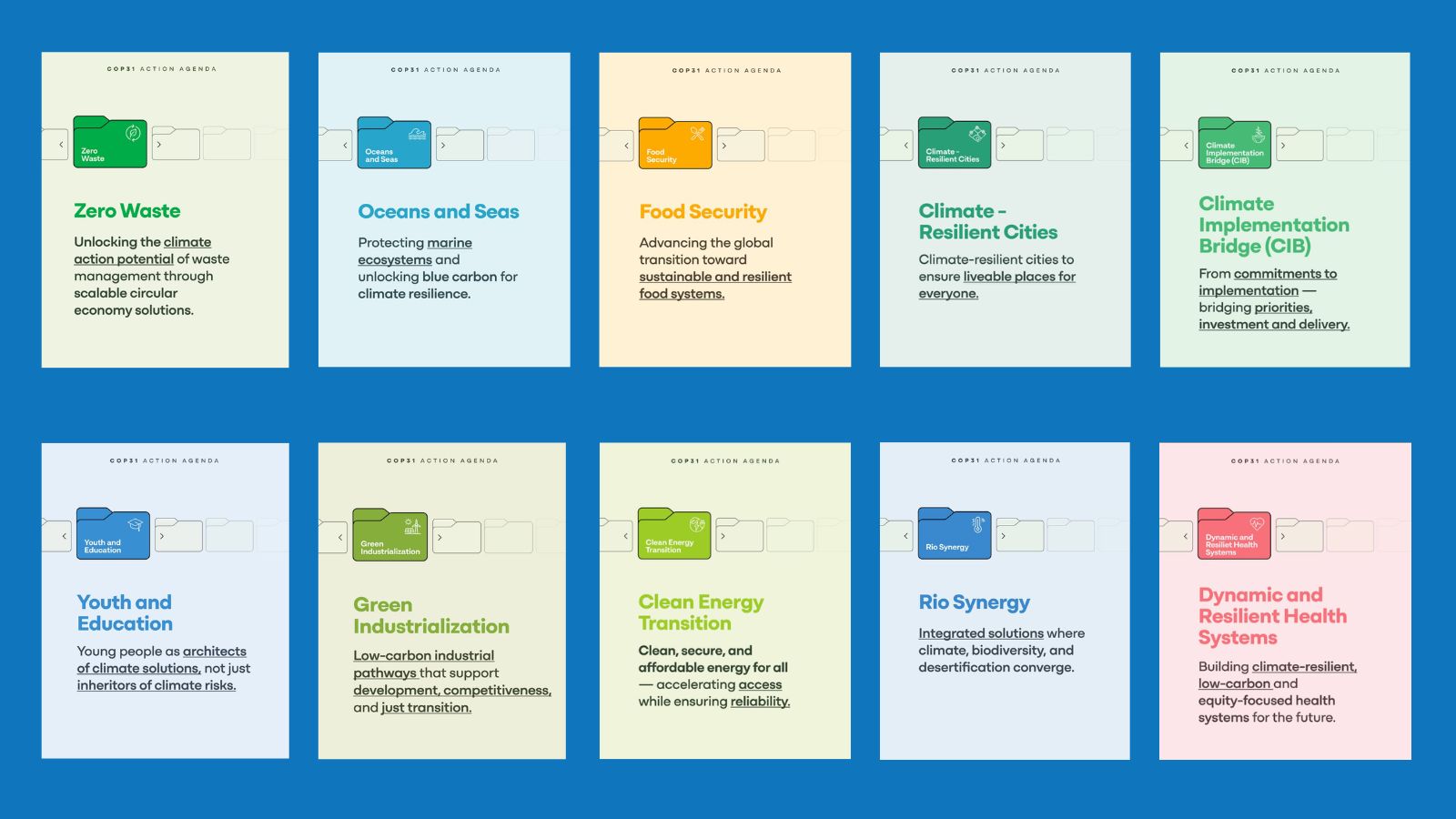
In his third Presidency letter, Kurum shared the CIB would stand “to close the gap between national climate ambition and implementation by helping countries translate climate and development priorities into finance-ready project portfolios”, taking a different approach to operationalizing climate and adaptation finance. Ahead of GST 2.0, he called on countries to submit outstanding nationally determined contributions (NDCs), whose scope and level of ambition will decide how long it will take to deliver the emission cuts necessary to return to a 1.5°C world.
Besides NDCs, high-level negotiations will home in on implementing the widely debated Global Goal on Adaptation (GGA), operationalizing the New Collective Quantified Goal (NCQG) and mobilizing the Loss and Damage Fund, which has faced particular scrutiny in the aftermath of the deadly collapse and flooding in Nepal earlier this year. Carbon markets and assessment of the Enhanced Transparency Framework (ETF) – which directly informs the Global Stocktake – will also sit high on the agenda at this year’s Leaders’ Summit.
35 by 35: Türkiye’s Vision for a Cleaner Future
COP31 takes place at a precarious juncture where conflict, economic crisis and intensifying climate change are rewriting the handbook on energy security – what it looks like, how it’s created, and what it takes to maintain it. For a world rocked by shocks like the Hormuz blockade, the promise of insulating countries and industries from volatile fossil fuel markets, especially in an era where electrification is now more accessible and cost-effective, is particularly inviting.
This is at the heart of Türkiye’s 35 x 35 electrification target, unveiled at SB64 in Bonn. The flagship Action Agenda initiative calls for a rise in the share of final global energy demand met by electricity from just over 20% today to 35% by 2035, driven by accelerating electrification across transport, buildings, and industry. The Turkish presidency has commissioned the International Energy Agency (IEA) to map out pathways and analyze the target’s economic and emissions benefits.
How we electrify, though, matters – one aspect concerningly absent from discussions of the target to date. Civil society has warned that a target without a parallel fossil fuel phaseout risks meeting rising electricity demand with coal and gas. Yet, neither co-host has addressed fossil fuel phaseout in any substantive way in their public positioning ahead of Antalya. Australia relies on fossil fuels for over 60% of its electricity, with new coal and gas projects in the pipeline. Meanwhile, Türkiye has 37 active coal plants and no phase-out date. Koç Holding, a top COP31 sponsor, and Türkiye’s largest oil refiner, quietly wound back its 2030 emission targets in 2025 to goals it had already nearly met, creating a combo that may well serve to greatly undermine the COP31 hosts’ credibility. Anchoring 35 by 35 to an adequately financed, credible phaseout pathway will determine whether the target amounts to anything beyond ambition on paper.

Implementation in the Age of Overshoot
The backdrop of COP31 could not be starker. Earlier this year, the UN Environment Programme’s Limiting Overshoot report officially confirmed that the current rate of climate action, even with full NDC implementation, will not be enough to prevent an overshoot of the 1.5°C target. The goal now is to limit said overshoot - peak emissions at around 1.7-1.8°C within the next decade, and set a path back to 1.5° by the end of the century – now deemed the best-case scenario. With every five years of current emissions pushing warming up by a further 0.1°C, a ticking clock hangs over every negotiating room in Antalya.
The Pre-COP held in Fiji and Tuvalu in early October offered a preview of the political terrain delegates will have to navigate come this November. Its key outcome document, the Taku Pakasoa Declaration, emerged as a signal of broader consensus than its Pacific setting might suggest. Endorsed by SIDS and unexpected players like India and the UAE alike, the Declaration calls for enhanced access to climate finance, a strengthened ocean-climate nexus, and keeping the 1.5°C target in reach.
As several delegations have noted, geopolitical shocks like the Hormuz crisis have only strengthened the case for an urgent, RE-powered energy transition for SIDS, now faced with rising energy costs and growing debt burdens alongside their disproportionate vulnerability to climate change. Mitigation and adaptation must therefore go hand in hand in COP31’s efforts to streamline and accelerate implementation.
COP31 is the latest building block on the foundation laid at COP28, where talks of a transition away from fossil fuels first emerged. Now it must enable delivery on the commitments made since, including those on climate finance, just transition, and adaptation. With the second Global Stocktake starting and NDCs under growing scrutiny, this year’s negotiations have much higher stakes. The question now is whether what happens in Antalya will move the world meaningfully closer to returning to 1.5°C, or simply make another scratch on a broken record where implementation is little more than a wishful mantra.

Asia Climate Solutions @ COP31
Asia sits at the center of global energy demand, industrial growth, and clean energy transition, making the region critical to delivering on the Global Stocktake. These conversations will be explored in depth in the Asia Climate Solutions (ACS) Pavilion, now in its third year. Operated by Solutions for Our Climate (SFOC), this year’s pavilion will feature around 60 events hosted by SFOC and over 20 partners, providing a platform to connect global commitments with implementation on the ground across Asia.
Interested in learning more about Asia’s role in ushering in a cleaner future for the planet? Visit the ACS Pavilion in the COP31 Blue Zone from November 9 to 20, 2026.
Subscribe to the official ACS Pavilion Calendar for updates on upcoming events, registration, and to receive the ACS newsletter directly in your inbox.
For on-the-ground updates at COP, follow SFOC on LinkedIn and Instagram.
See you in Antalya!


