
On July 21, 2026, South Korea’s Ministry of Climate, Energy and Environment (MCEE) officially abolished separation regulations along roadways for solar power. The long-awaited rule change was introduced under the revised Enforcement Decree of the Renewable Energy Act. Following the amendments to the Renewable Energy Act in February this year—which established the legal basis for national oversight of separation regulations—this latest administrative update places what has long been criticized as some of Korea’s most irrational barriers to solar development within new bounds under the principle: "prohibition as the rule, exceptions only where justified." At last, a baseless restriction that had been tolerated, neglected and left largely unaddressed for almost ten years is being brought under government oversight.
For the past five years, Solutions for Our Climate (SFOC) has been pressing for reform of these regulations, a problem the Korean government has recognized but failed to solve. Why? Because the issue was never a question of distance. At its core, it was the product of both persistent misconceptions about solar power and a preference for administrative convenience. The result was the sidelining of one of the fastest and most effective pathways to cutting greenhouse gas emissions. And that, we could not simply watch happen.
1. Solar Power: The Fastest Route to Emissions Cuts
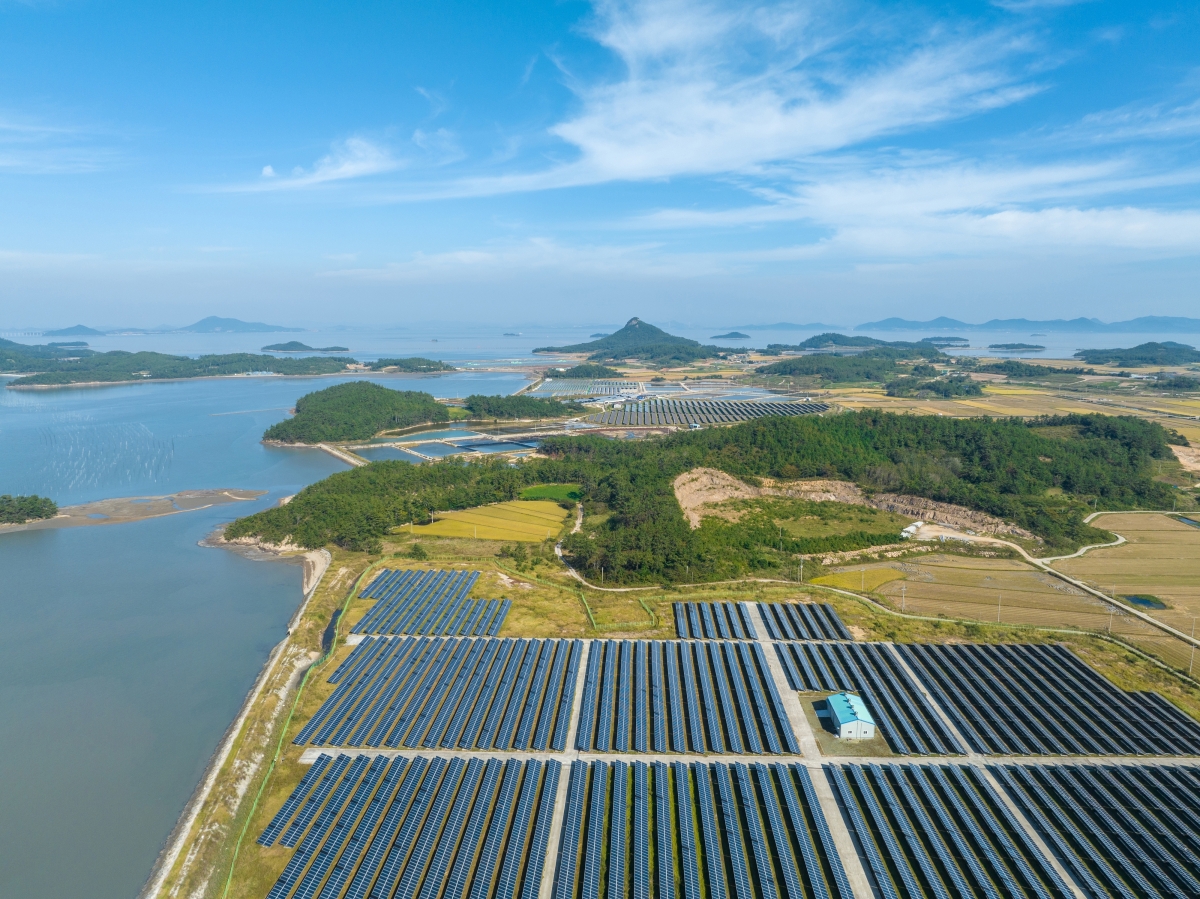
With the window to address the climate crisis rapidly closing, solar power stands out as one of the most practical and readily deployable tools to slash greenhouse gas emissions. Unlike fossil fuels, solar power produces no direct emissions during operation and incurs no fuel costs, allowing capacity to be added more quickly than conventional energy sources. Solar energy has consequently become the world’s fastest-growing source of power, propelled by an urgent push for decarbonization, sharply falling installation costs, and its growing importance as a pillar of national energy security.
South Korea, however, has not followed this pattern, and it’s not a capacity issue. Often arbitrary separation distancing regulations have closed off many of the sites where potential solar expansion could be realized, leaving the country yet to match its 2020 peak of 4.66 GW in new annual installations.
2. Regulation Without Accountability: A Decade of Inaction
Separation regulations refer to development permit standards adopted by local governments through municipal ordinances. They require solar projects to be built at a minimum distance from roads or residential areas. There is no scientific evidence that solar panels harm health or cause hazardous glare - yet municipalities adopted these rules without technical review or public deliberation, effectively closing off solar development altogether. The issue first entered the official policy debate in 2016, when the Board of Audit and Inspection questioned the rationality of the regulations. Yet nearly a decade passed before meaningful reform began.
There were structural factors that allowed these regulations to persist for so long. The 2017 guidelines issued by the Ministry of Trade, Industry and Energy (MOTIE) were not legally binding. The regulations themselves were imposed through municipal planning ordinances under Article 56 of the National Land Planning and Utilization Act and its Enforcement Decree, which falls under the jurisdiction of the Ministry of Land, Infrastructure and Transport (MOLIT). As a result, the rules had no legal standing at the national level. The central government issued recommendations while declining to take full responsibility.
Local governments, reluctant to confront opposition from residents, chose the easiest course: placing greater distance between solar projects and nearby communities. Our team identified this pattern of passive administration as the root cause of the problem and has continuously reiterated the need to establish a binding national policy framework to ensure local governments play an active role in responding to the climate crisis and accelerating the energy transition.
3. Five Years of Action: Pressing the Central Government to Act
Over the past five years, our team has moved solar separation rules out of the hands of individual municipalities and onto the national policy agenda – from a local matter to a question the central government is obliged to answer.
The work began with data. In our 2020 report, Nowhere to Go: How South Korea’s Siting Regulations are Strangling Solar, we analyzed the relationship between the spread of separation regulations and the decline in new solar installations. Geographic information system mapping of three local jurisdictions found that the regulations made solar development impossible on more than 99 percent of the land in each jurisdiction. The research also showed that distance metrics varied widely from one municipality to another, revealing an absence of standardized national oversight. In 2025, the team expanded that research nationwide through an issue brief titled Solar Power Lost to Passive Administration: Separation Regulations Without Justification. The findings were stark. Separation regulations eliminated nearly two-thirds of Korea's viable solar sites, taking 8,889 km² off the table — an area the size of Puerto Rico (9,104 km²). This made one thing clear: this was not a localized dispute, but a nationwide policy failure.
We then turned to the question of responsibility. In August 2024, our team filed a constitutional complaint against the city of Jinju, arguing that its strengthened separation ordinance unlawfully restricted landowners' property rights and the freedom to conduct business. A month later, together with 15 citizens, we filed another constitutional complaint, contending that MOTIE had known about the problems created by the regulations but failed to take legislative action. The issue was no longer simply whether an individual local ordinance was unconstitutional. We were asking whether the government could evade responsibility for allowing an irrational system to continue at the expense of its people.
Alongside the litigation, we organized National Assembly forums, policy roundtables and consultations with government ministries. We repeatedly raised the significance of the problem with the Anti-Corruption and Civil Rights Commission, MOLIT and MOTIE, calling for a national solution.
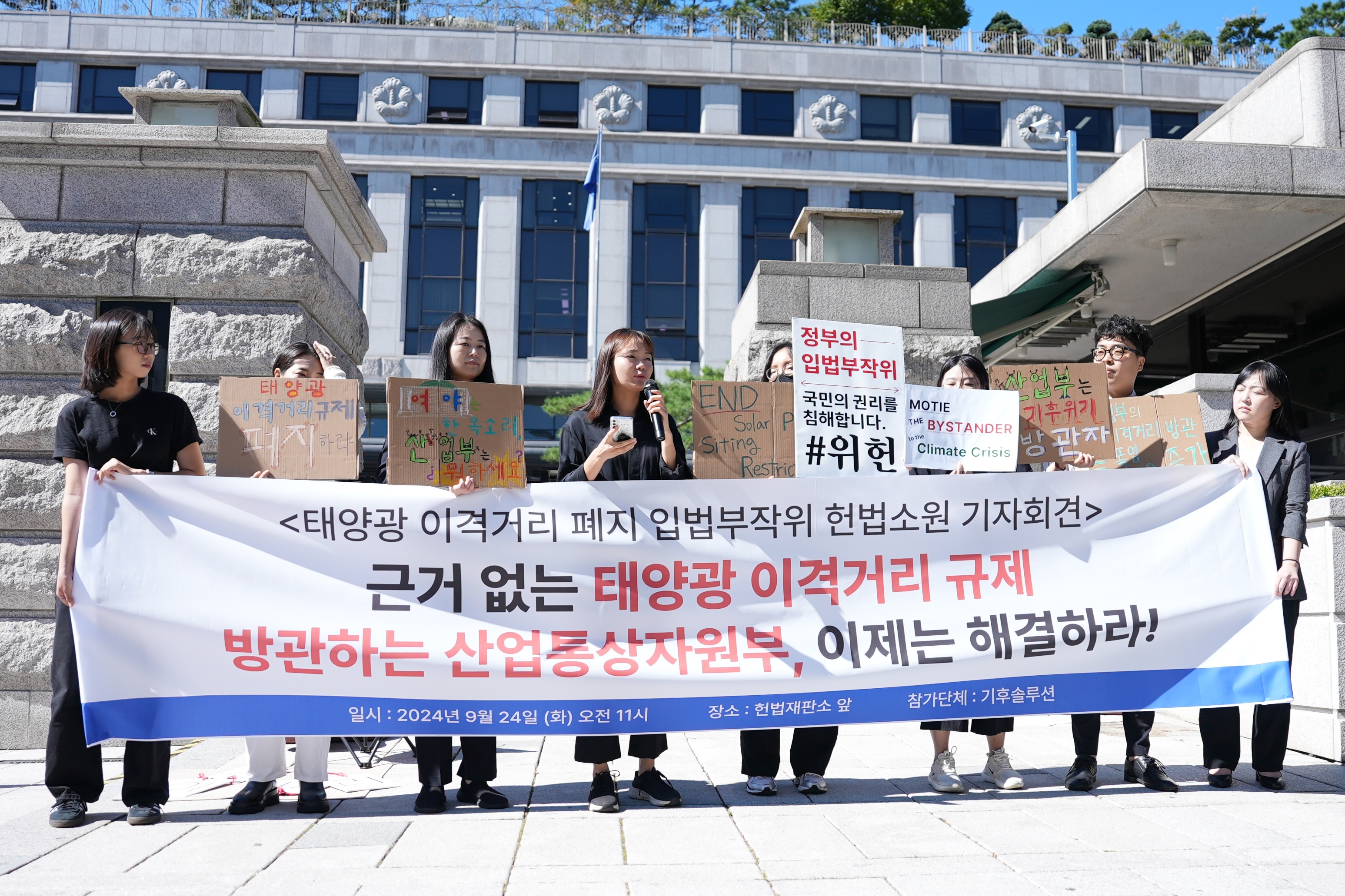
These combined efforts gradually shifted the debate. Separation regulations were no longer viewed as a source of local complaints, but as a national reform priority. The discussion reached across the aisle where lawmakers introduced legislative amendments, and public policy bodies—including the Korea Institute of Public Administration, the Korea Energy Economics Institute, and the National Assembly Budget Office—began examining the issue as well. Official reform was eventually included in Lee Jae-myung’s presidential campaign pledge, helping build the political momentum that led to the latest proposed revisions of the Enforcement Decree.
4. The Principle is Set. The Numbers Remain.
The government’s reissued proposal caps separation regulations from residential areas—defined as five or more households—at 200 meters. It also completely prohibits local governments from imposing separation regulations between solar facilities and roads. The reform is guided by the principle of “prohibition as the rule, exceptions only where justified”, with the goal of preventing local governments from introducing unsupported restrictions through their ordinances. The decision to abolish road separation regulations altogether reflects this principle most clearly.
The significance of this reform should not be understated. Until now, local governments imposed separation regulations of up to 1 kilometer from roads and residences, with little consistency, oversight or scientific basis. There is no definitive evidence requiring solar facilities, as a general rule, to be kept away from roads or residential areas. Under the new system, municipalities that applied particularly excessive distances of 500 meters or one kilometer are likely to see the greatest increase in land potentially available for solar development. Areas where solar projects had previously been ruled out by groundless restrictions will now have an opportunity to reconsider them under more reasonable standards. By setting clear legal limits to replace excessive and inconsistent local rules, this reform marks progress towards the MCEE’s wider aim of accelerating the deployment of renewable energy.
A 200-meter cap, however, is not the final destination. To fully align with the spirit of the law, separation regulations should ultimately be prohibited unless a particular area has a specific and demonstrable need for protection. But for the first time, the central government has hit the brakes on regulations that had continued expanding without justification, marking an important first step toward the reforms that still lie ahead.
5. Beyond Regulation: Rebuilding Public Trust
Local governments must now work with their communities to discuss how and where solar power should be accommodated. Residents, project developers and public authorities should actively take part in policy discussions and decision-making processes. Together, they must shape the expansion of renewable energy in a way that allows it to coexist with local communities.
This means the central government must look beyond regulatory reform. It must continue engaging with local societies, improving policies, and rebuilding public trust so that solar power is recognized not as a source of conflict and misunderstanding, but as an essential tool for addressing the climate crisis and advancing the energy transition.
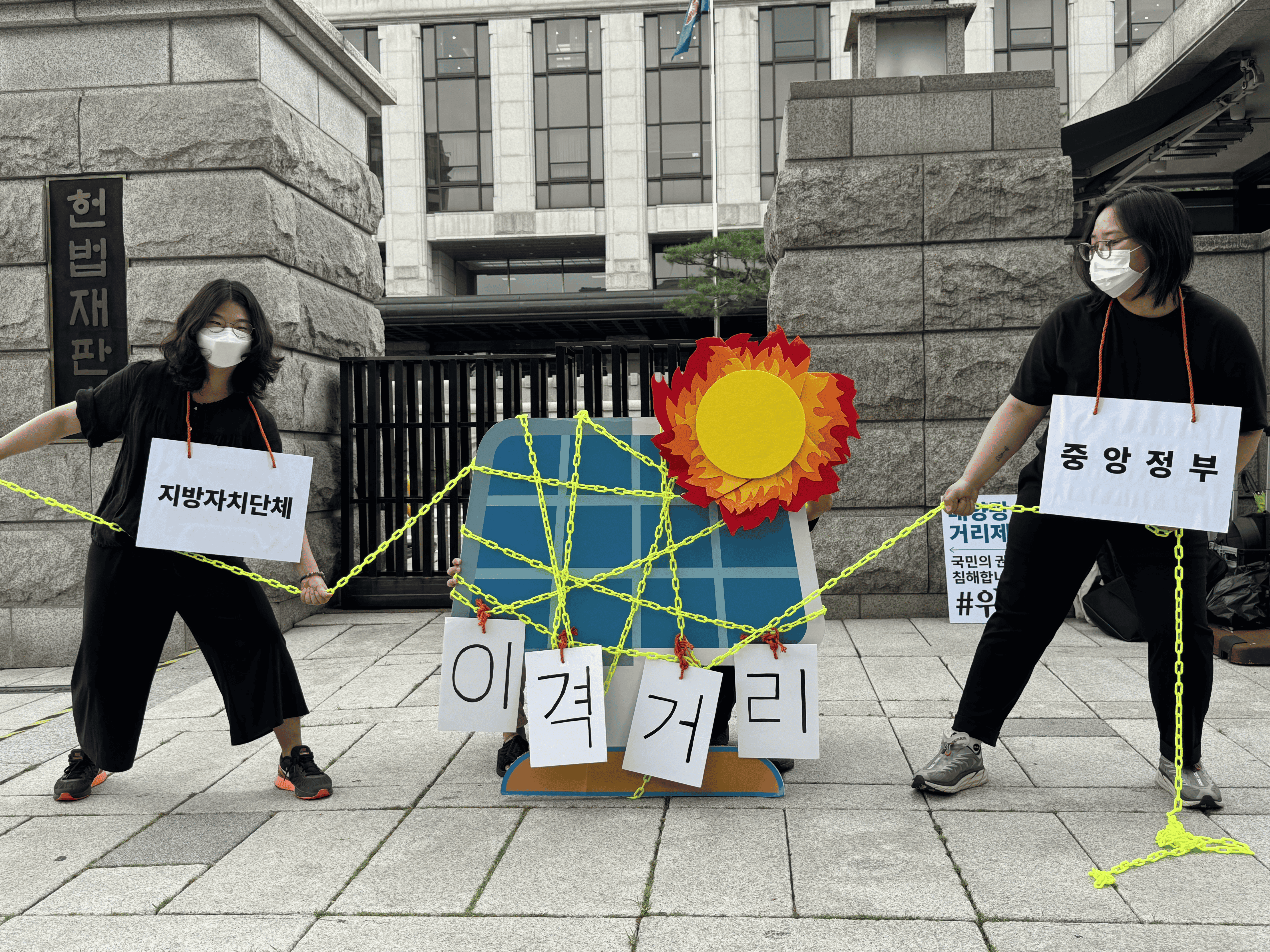
What we challenged over the past five years was never simply a rule about distance. It was a system in which arbitrary administrative practices prevented solar power from realizing its full potential, while a responsibility belonging to the national government was dismissed and neglected as a matter of local complaints.
This year’s amendments to the Renewable Energy Act and its Enforcement Decree mark the first steps toward repairing that system. Building on this foundation, decisions about where solar facilities can be built must be dictated by scientific evidence and objective data. Through continuous engagement with local communities, South Korea must ensure that solar power becomes not a source of friction, but a cornerstone for energy transition and climate resilience.
Related insights

An Ambitious 100GW Renewable Energy Plan Risks Being Undermined by Excessive Separation Distance Requirements
Regional accountability strengthens the plan, but the separation distance decree could undermine it.
2026-07-07

Advancing the Transition Away from Fossil Fuels
Key Outcomes from Santa Marta
2026-05-29

Green Leadership or Green Lag? South Korea in a Regional Race
South Korea's 2035 NDC
2025-11-18
At a Crossroads: South Korea’s Energy Transition and the Role of Green Finance
From Global Insights to Local Action
2025-10-20

What South Korea’s Next President Must Do to Address the Climate Crisis
SFOC’s 10 Climate Solutions
2025-05-02

South Korean “Green Premium”, Missing the Mark on Global Emissions Accounting Standards
Lack of transparency and credibility undermines renewable energy claims
2025-02-21

Green Premium or Greenwashing?
Understanding South Korea’s RE100 challenges
2024-08-21

Samsung Electronics’ RE100 Ambitions and South Korea’s Yongin Semiconductor Cluster
A model for green tech or an Olympian energy struggle?
2024-08-09


