Chiraphat Chamket was ten years old when the Burapa Power Project first cast its shadow over her community in Chachoengsao Province, Thailand. Eighteen years later, she traveled thousands of miles to Switzerland to compress that lifetime of resistance into two pages of speech -- delivered in a language not her own -- before UBS shareholders.
That image alone should give investors pause.
The scene outside the UBS Annual General Meeting followed a familiar choreography: shareholders streamed into the venue, protesters gathered with banners in hand, and press cameras hovered around the commotion. But the noise outside is only a sliver of a much broader pattern, one in which communities most affected by large-scale energy investments struggle to cut through layers of institutional distance to be heard in the rooms where decisions are made.
This disconnect -- between those who profit from capital gains and those who bear the downstream costs -- is not unique to any single bank's AGM. But UBS is not a passive bystander. It is among the major financiers of Thai energy companies, including Gulf Energy Development (GULF), which holds stakes in the Burapa gas-fired power plant and three Mekong hydropower dams (Pak Beng, Pak Lay, and Luang Prabang).
Burapa’s Shift to Gas Leaves Core Issues Unresolved
The 540 MW gas-fired Burapa Power Project has faced sustained local opposition since it was first proposed as a coal plant in 2008. After a decade of resistance forced it off the table, it was restructured as a gas project in 2019. GULF became a shareholder in early 2020. The fuel changed; the community's concerns did not.
The construction of high-voltage transmission lines has severely restricted landowners' rights to use their own land, threatening local livelihoods, food security, and economic stability. Affected landowners have filed administrative lawsuits, accepted by Thailand's Administrative Court, arguing the project proceeded without their consent and that the consultation process excluded directly impacted residents and withheld critical information.
The project's planned extraction of 12,000 cubic meters of water per day will intensify competition between industrial users and communities already contending with scarce water resources, raising the very real risk of resource conflict in a province that cannot afford it.
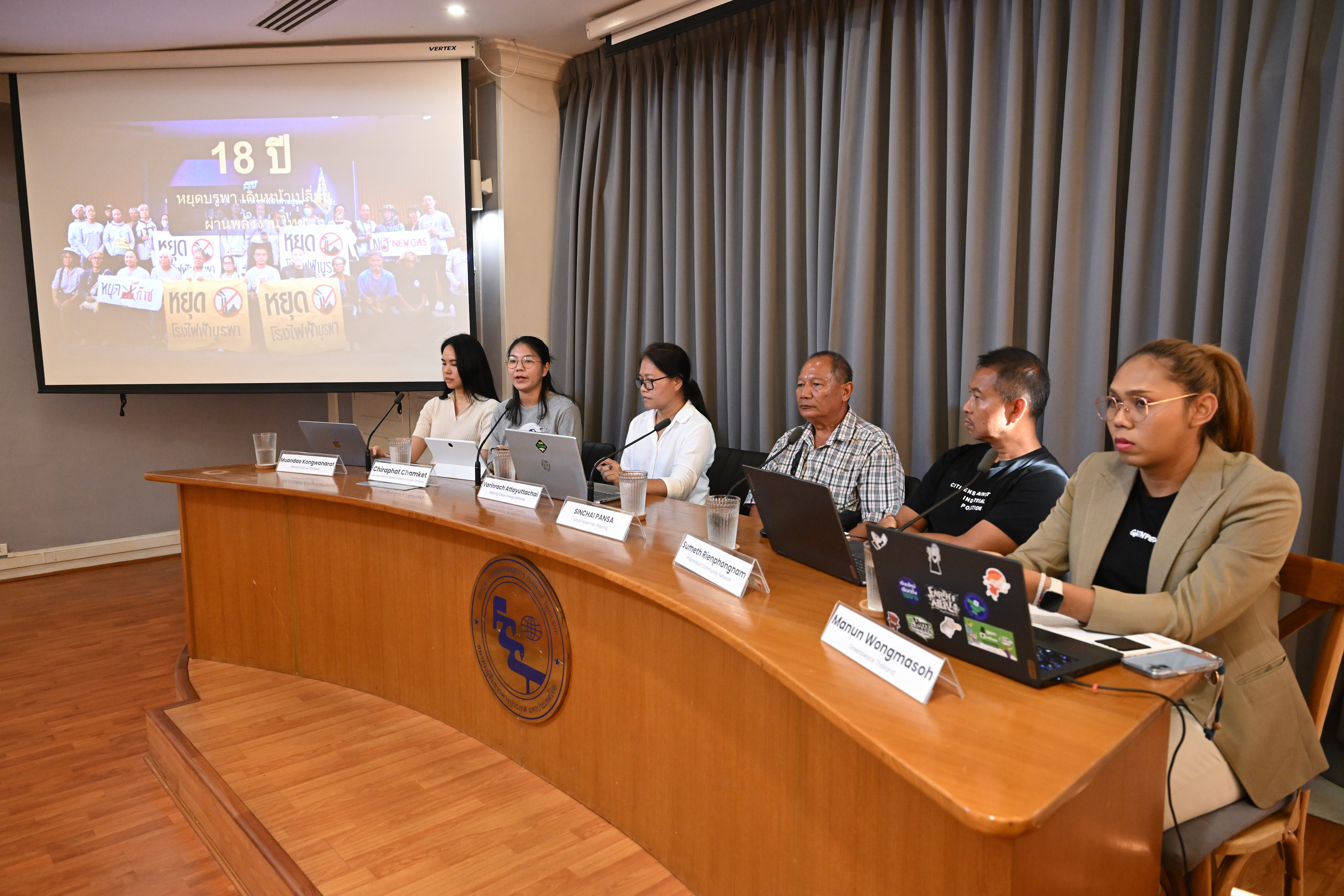
Chiraphat is not alone in raising these issues. She is one voice among many from multiple communities affected by GULF-linked projects. Before the AGM, Chiraphat and her fellow community representatives convened a media briefing to discuss the potential on-the-ground impacts of these investments. That took real courage, particularly given that, based on publicly available information, GULF has filed at least 10 civil and criminal defamation cases since 2020.
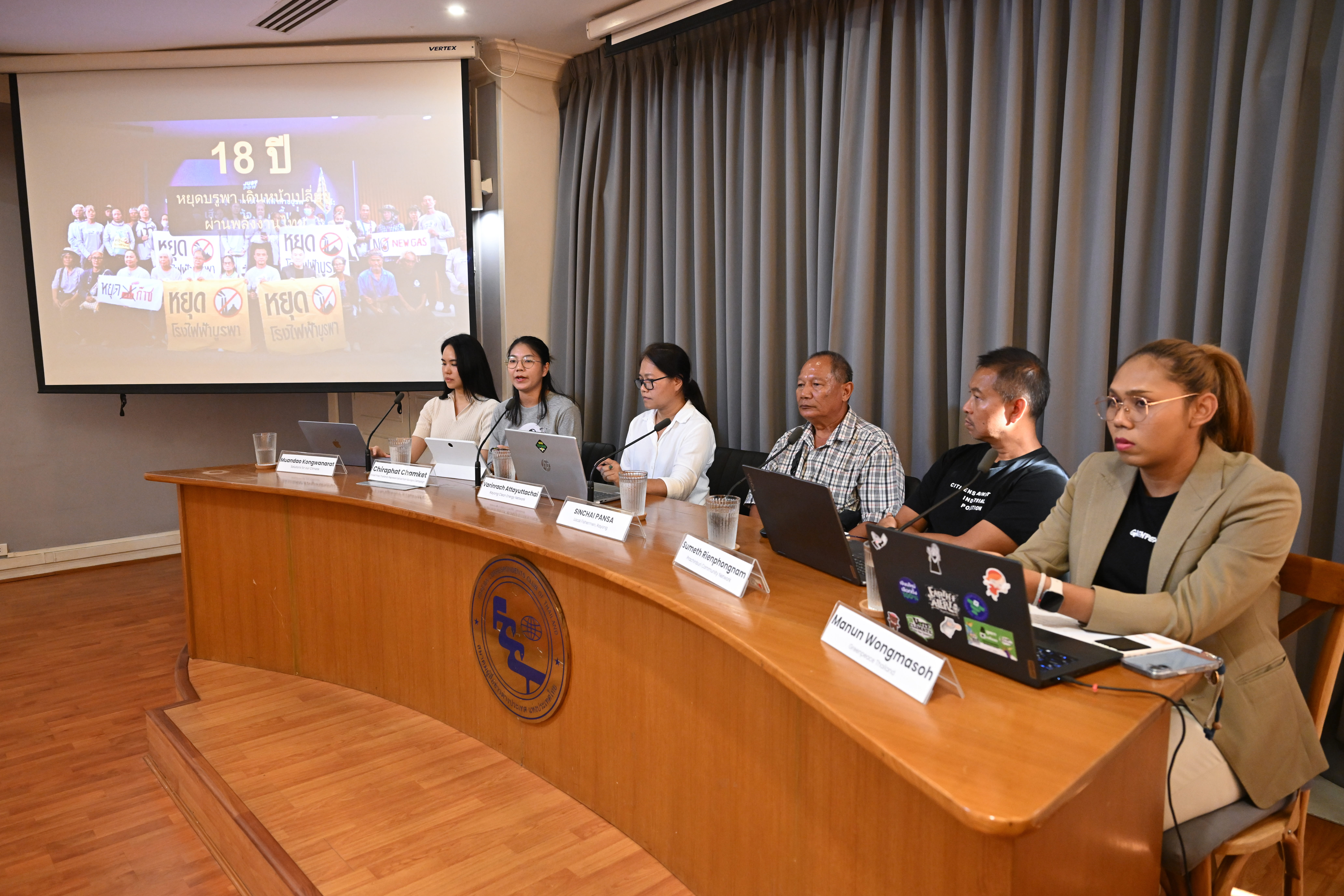
Image 1: Representatives from local communities and civil society groups held a media briefing in Bangkok ahead of the UBS AGM to highlight the environmental, social, and financial risks linked to large-scale energy investments in Thailand.
SLAPPs: When Legal Action Becomes a Silencing Tool
Such cases, according to many human rights watchdogs, are examples of Strategic Lawsuits Against Public Participation (SLAPPs). The defendants of SLAPPs frequently appear to have done nothing more than voice opinions, raise questions, or participate in public policy debates on energy governance, electricity pricing, transparency of power purchase agreements, and rising electricity costs. The damages sought are often disproportionate. Legal action has reportedly extended beyond primary speakers to those who merely shared or amplified the information. In some cases, elected parliamentarians exercising their legislative duties have been targeted, raising serious questions about the sanctity of parliamentary privilege and the health of democratic oversight.
This is a material ESG risk. A business environment in which civic space is systematically narrowed through legal intimidation is one that carries long-term governance and reputational exposure for every investor in that ecosystem.
Transboundary Risks That Cannot Be Contained
GULF's hydropower ambitions extend far beyond Thailand's borders. Its investments in the Pak Beng, Pak Lay, and Luang Prabang dams on the Mekong River mainstream carry risks that cross national boundaries and cannot be managed unilaterally.
Pak Beng has raised concerns over community displacement and reduced access to fisheries that local communities rely on for their livelihood. Pak Lay contributes to the cumulative burden of multiple dams along the same river, with studies pointing to declining fish stocks, disrupted sediment flows, and downstream impacts on food security. Luang Prabang sits near culturally significant and ecologically sensitive sites and faces serious concerns about altered river flows and displacement.
What This Raises for UBS
Chiraphat crossed continents to be heard, reflecting a broader reality in which communities affected by large-scale energy projects increasingly seek avenues beyond their national borders to raise unresolved concerns.
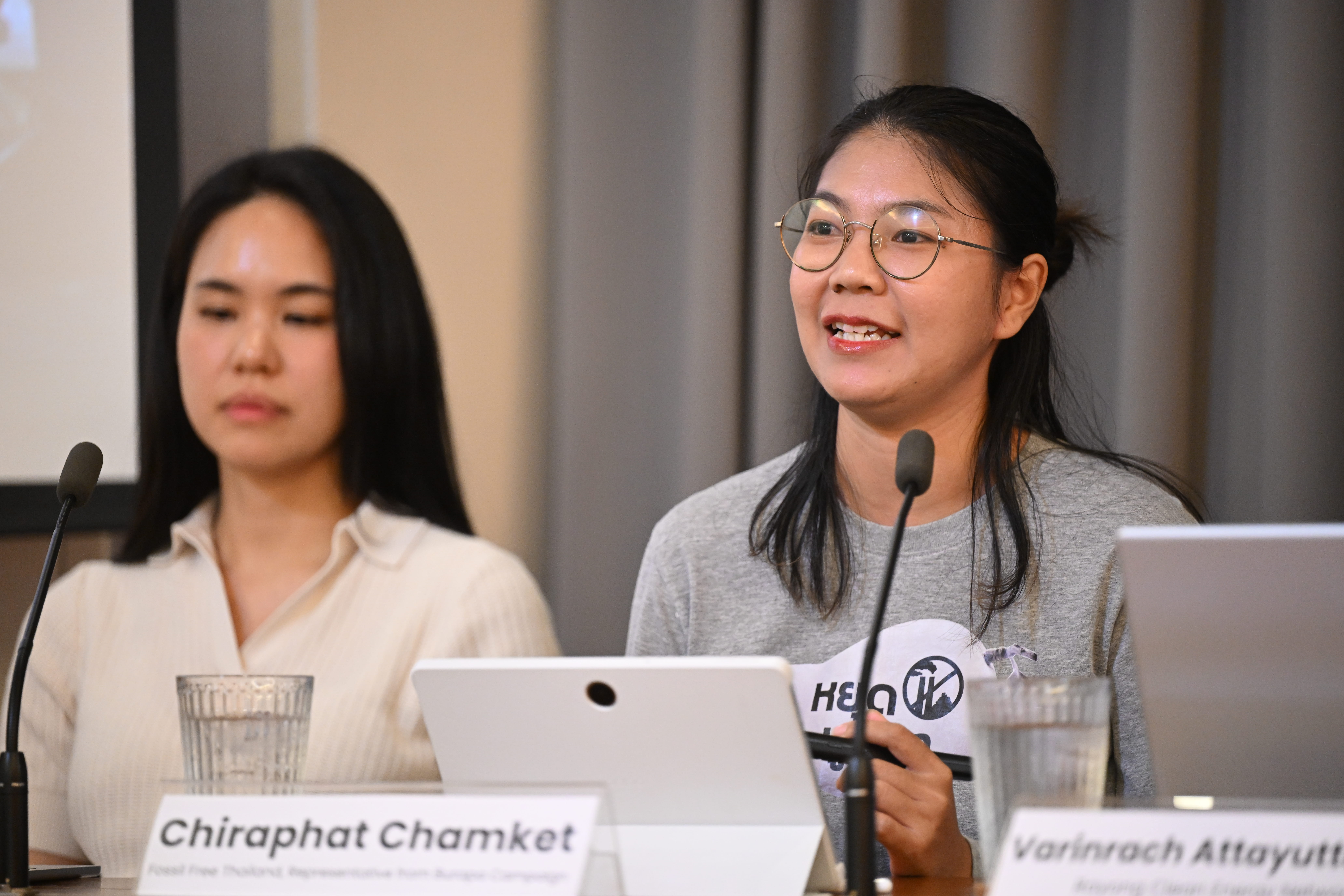
Image 2: Ahead of the AGM, Chiraphat and fellow community representatives convened a media briefing to shed light on the potential on-the-ground impacts of energy investments on local communities and ecosystems.
For UBS, this raises questions about whether existing due diligence and engagement practices are sufficient to capture the full scope of risks associated with its exposure to GULF’s energy portfolio, risks that extend beyond environmental impacts to include governance challenges, legal pressures on civic participation, and the long-term stability of affected communities.
ENDS.
Related insights
Advancing the Transition Away from Fossil Fuels
Key Outcomes from Santa Marta
2026-05-29
Explained: How LNGC Shipowners Fuel Harm Thousands of Miles Away
How the LNGC industry's weak environmental standards are destroying ecosystems and livelihoods
2026-05-13
Explained: The Public Finance Mechanisms Keeping the LNG Carrier Industry Afloat
How Government Funds are De-risking LNGC Expansion
2026-04-02
Explained: How Private Banks are Enabling LNG Carrier Expansion
How finance, not demand, is keeping the LNG carrier industry afloat
2026-03-09

Hyundai Has a Chance to Lead Asia’s Auto Transition — But Time Is Running Out
Time is running out for Hyundai to match Its EV success with climate transparency
2025-09-23

World Environment Day, June 5
#BeatPlasticPollution: A Climate Imperative
2025-06-05

Financing the Climate Crisis: South Korea’s Global Fossil Fuel Footprint
The Role of Public Financing Institutions in the Age of Climate Change
2025-06-04

Navigating the Blue Future: SFOC at the 2025 Our Ocean Conference
Busan, Korea (April 28 - 30, 2025)
2025-05-08

Green Promises, Dirty Money: The Silent Support Behind KEPCO’s Fossil Expansion
KEPCO’s Investors and Underwriters: Ignoring the Warnings, Enabling the Problem
2025-04-10

Retracing the Steps of the LNG Trade: Why Canada's First Nations Came to Korea
The LNG Boom is "Good News"...for Whom?
2025-03-13

True Climate Impact of LNG Carriers
A comprehensive lifecycle emission analysis of LNG, enabled by LNG carriers
2024-10-11

Floating Pipelines Fuelling the Fossil Fuel Crisis: LNG Carriers
2024-09-01


