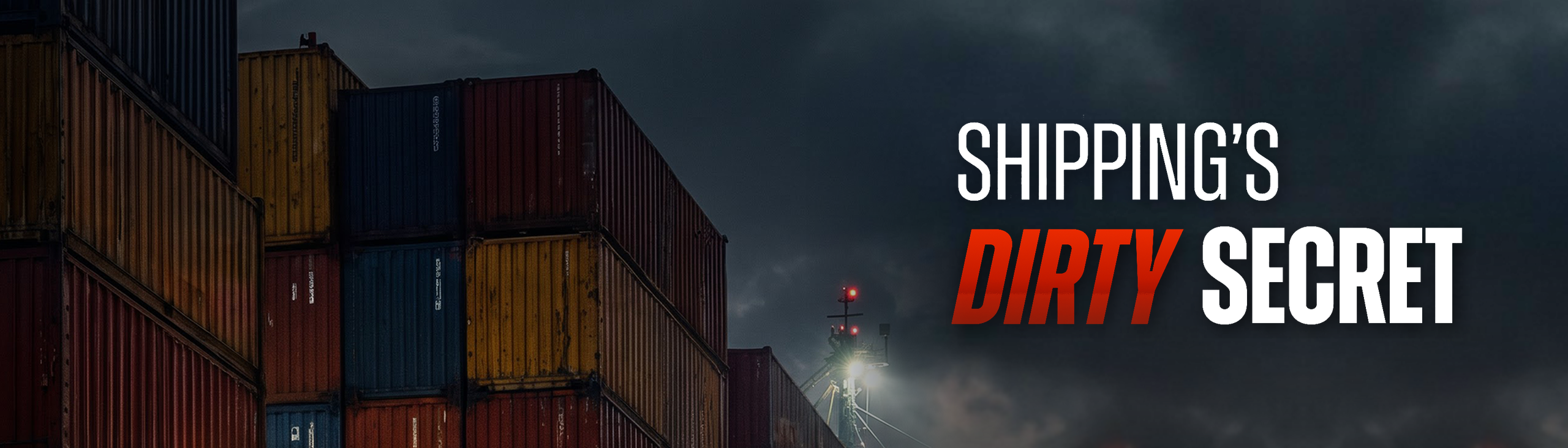
Global shipping carries most of the world's trade, and it runs almost entirely on fossil fuels. The world's roughly 50,000 merchant ships emit around three million tonnes of CO₂ every day, close to three percent of global greenhouse gas emissions. If shipping were a country, it would rank as the world's sixth-largest emitter.
But it isn't a country. National climate targets cover emissions within a country's borders, and ships on the high seas fall outside them. As a result, no single government is accountable for international shipping emissions. The only body that can set binding rules for the global fleet is the International Maritime Organization (IMO), the United Nations agency for shipping.
In the first week of December, IMO member states meet in London for a decision that could, for the first time, put a global price on shipping's greenhouse gas emissions.
A fleet built on fossil fuels
Around 95 percent of today's fleet by tonnage runs on conventional fossil fuels, mostly heavy fuel oil, a residue of crude oil refining. It remains the default because it is cheap, available in almost every port, and compatible with existing engines.
Zero- and near-zero-emission fuels such as green methanol and green ammonia are available but scarce, and they cost several times more than conventional fuel. Many shipowners have therefore turned to liquefied natural gas (LNG), which is often promoted as a transition fuel. LNG, however, is still a fossil fuel. Its main component, methane, has a warming effect more than 80 times that of CO₂ over 20 years, and real-world measurements show that ships release more unburned methane than regulators currently assume.
A self-reinforcing cycle
The shipping sector is caught in a cycle. Clean fuels remain expensive because production is limited. Production remains limited because few ships can use them. Few ships can use them because shipowners continue to order fossil-fuelled vessels. And finance follows existing demand.
Because ships operate for 25 years or more, each fossil-fuelled vessel ordered today locks in emissions well into the 2050s. Around 93 percent of the tonnage currently on order is designed to run on fossil fuels. Outside the European Union, shipowners pay nothing for the carbon they emit.
What is at stake in London
In December, IMO member states will decide on the Net-Zero Framework (NZF), a global mechanism that would require large ships to progressively reduce the greenhouse gas intensity of their fuel. Ships that fall short would pay for their emissions, while those using zero- or near-zero-emission fuels would be rewarded.
The framework was approved in draft in April 2025, but its adoption was postponed in October 2025. Negotiations have continued since, with some member states seeking to weaken the framework and others to abandon it.
A strong framework with a meaningful carbon price would send a clear signal to fuel producers, shipyards, ports and financiers at once, and break the cycle. Further delay, or a weakened agreement, would allow today's fossil-fuelled ships to keep operating into the 2050s.
For South Korea, as a global leader in shipbuilding, the outcome will shape the competitiveness of its yards and shipping companies. Early alignment with global standards will determine whether Korea leads the transition or carries the risk of stranded assets.
The IMO's decision in December will show whether international shipping is finally held accountable for its emissions.
Related SFOC research: Capital at the Helm: Financing Decisions and the Future of Shipping
Related insights
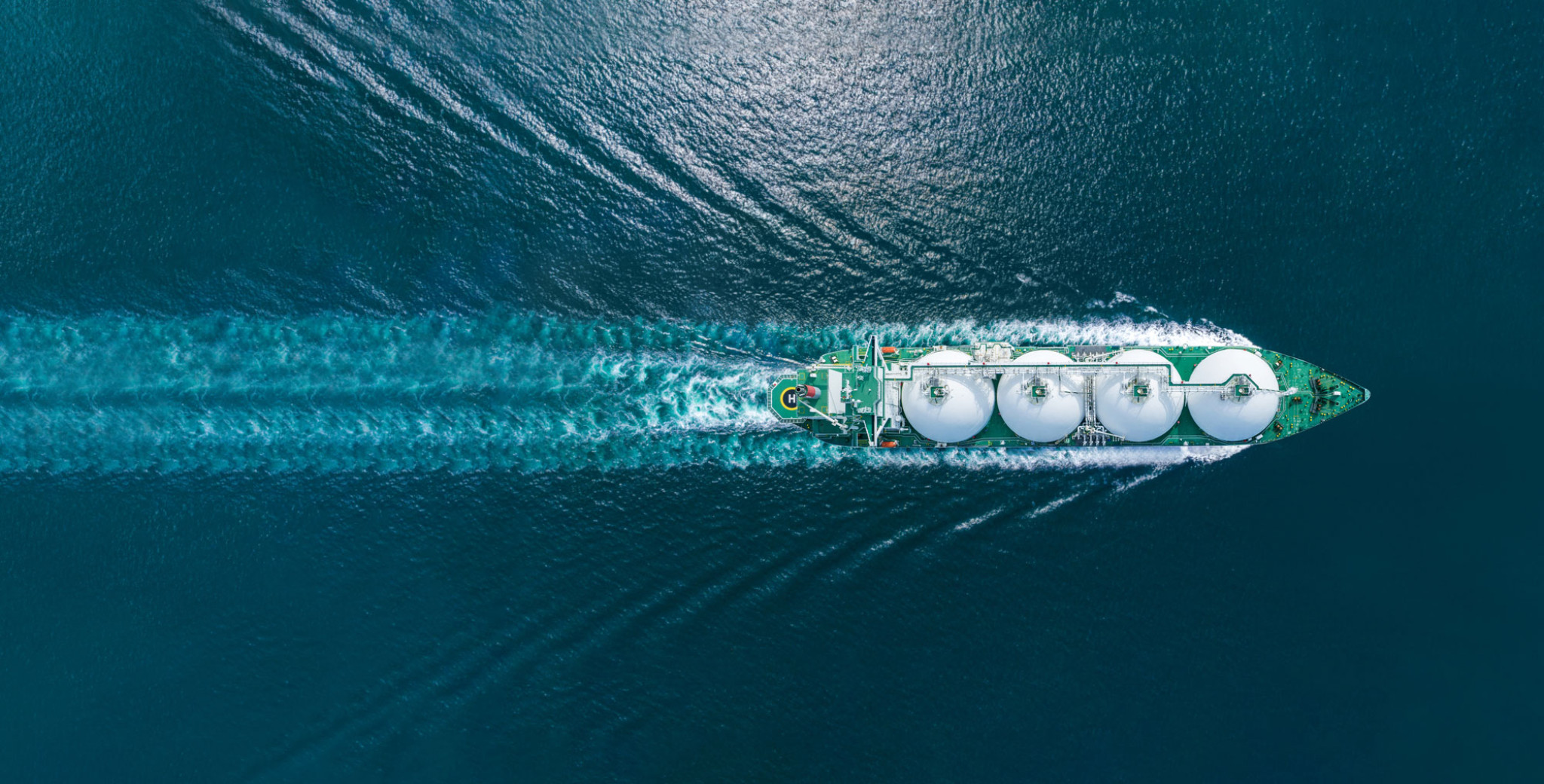
Explained: How LNGC Shipowners Fuel Harm Thousands of Miles Away
How the LNGC industry's weak environmental standards are destroying ecosystems and livelihoods
2026-05-13
Explained: How Private Banks are Enabling LNG Carrier Expansion
How finance, not demand, is keeping the LNG carrier industry afloat
2026-03-09

Navigating the Blue Future: SFOC at the 2025 Our Ocean Conference
Busan, Korea (April 28 - 30, 2025)
2025-05-08

IMO Approves First-Ever Global Carbon Pricing for Shipping — But Is It Enough?
MEPC 83 Marks a New Era in Shipping Decarbonization, Yet Falls Short in Ambition
2025-04-25

International Shipping Industry’s Passage to Net-Zero by 2050
What really happened at the MEPC 82?
2024-10-11

True Climate Impact of LNG Carriers
A comprehensive lifecycle emission analysis of LNG, enabled by LNG carriers
2024-10-11


