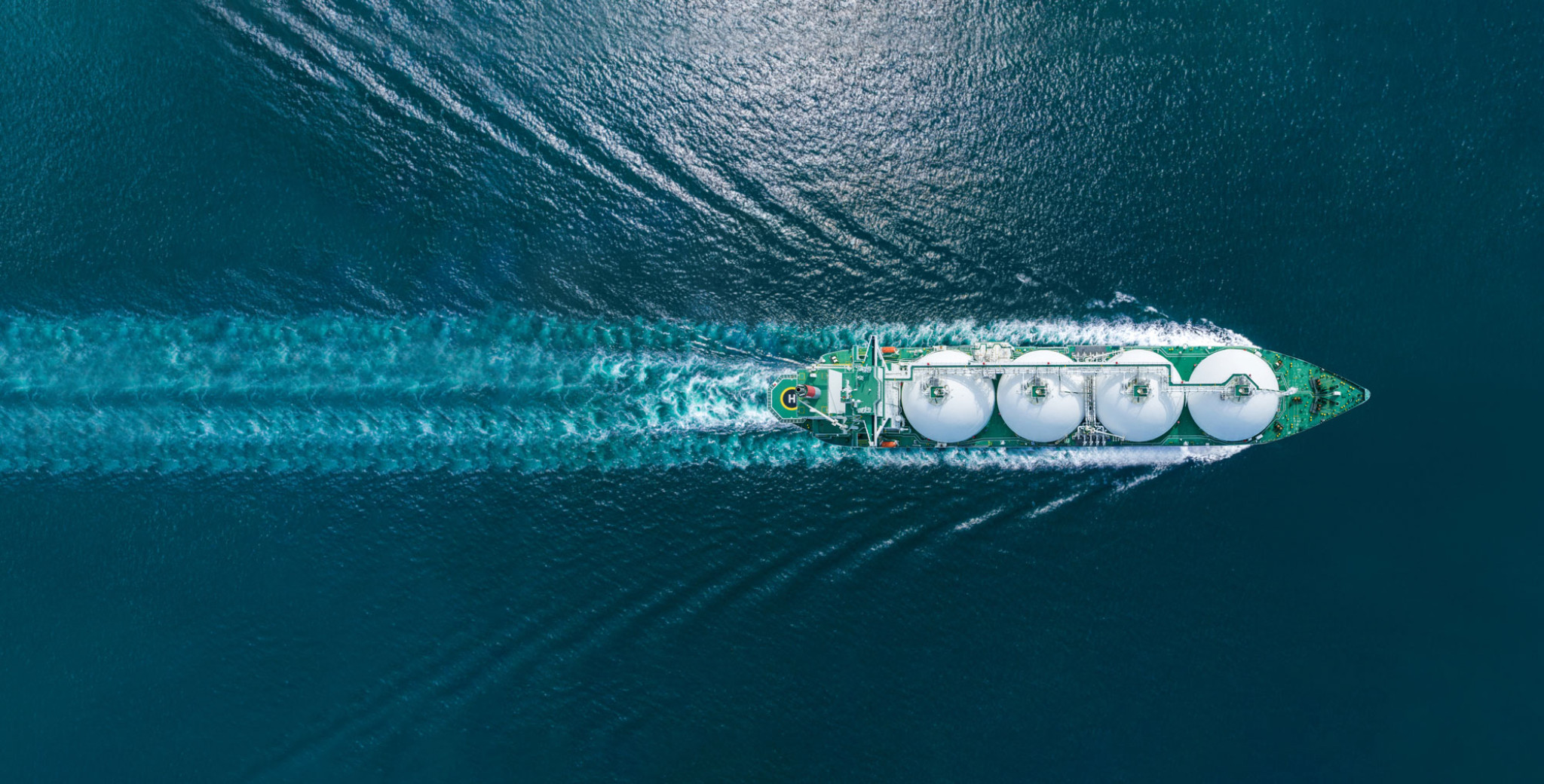
This article is the third and final piece in a three-part series under SFOC’s Explained column examining the role of public and private financing in the LNG carrier industry, as well as its environmental impacts.
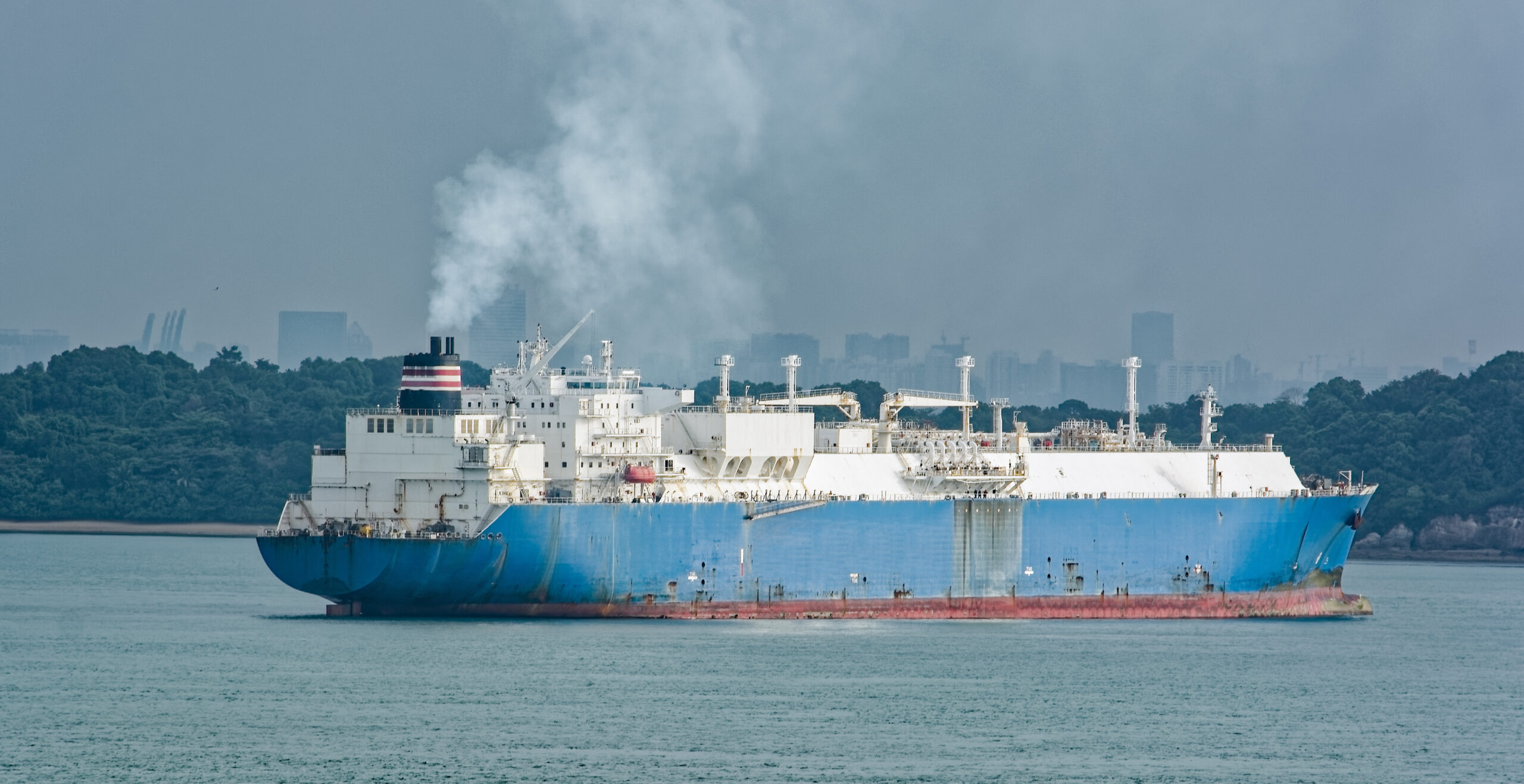
Over the course of this series of LNGCs Explained blogs, we’ve explored what LNG carriers are, identifying how a mutually reinforcing relationship between public and private finance enables and de-risks their continued construction despite huge oversupply, stranded asset risks and a heavy environmental footprint. In our final LNGC-focused edition, we home in on the impacts caused by these carriers and touch upon the decision-makers behind LNGC expansion - shipowners – and how they are perpetuating harm to both the planet and to people thousands of miles away.
The Dirty Truth About "Green" LNG
Liquefied natural gas (LNG) is widely considered a “greener”, “cleaner” alternative to traditional fossil fuels like coal and is often marketed as a bridge fuel enabling a more financially feasible, gradual transition to renewable energy (RE) sources like solar and offshore wind. This reputation has been upheld by a combination of the LNG industry’s perceived stability, the often-prohibitive costs of RE expansion, and a problematic, incredibly narrow approach to calculating the sector’s true environmental footprint.
Research says otherwise. A 2025 SFOC report revealed LNG carriers enable around 12.7 billion metric tonnes of CO₂e annually each year, most of which go unaccounted for in the absence of a comprehensive assessment of the entire LNGC supply chain. 79% of these emissions occur during actual vessel operations, with the remainder originating from upstream and pre-operational activities, including LNG carrier (LNGC) construction. The steel used to build these giant vessels is often produced in coal-based blast furnaces with their own environmental footprint. Global shipyards racked up almost 72.2 million tonnes in steel-related emissions between 2021 and 2022. Every additional LNG tanker represents a 30-year fossil fuel infrastructure commitment, locking in emissions and hindering international climate commitments.
One study’s cradle-to-grave lifecycle assessment of a 174,000 m3 LNGC, covering the ship’s lifespan from material extraction to disposal, found the average large-sized LNG carrier’s total global warming potential (GWP) to be 2.6 million tons of CO2e. The operating phase – i.e. fuel use – was the biggest contributor to the ship’s projected emissions, along with the end-of-life phase, with high-emitting steel melting during the ship recycling process.
Unfortunately, the environmental impacts of LNG carriers (LNGCs) do not simply stop at carbon emissions, and their consequences spread far beyond the countries in which they are built and operate from.
Methane Slip
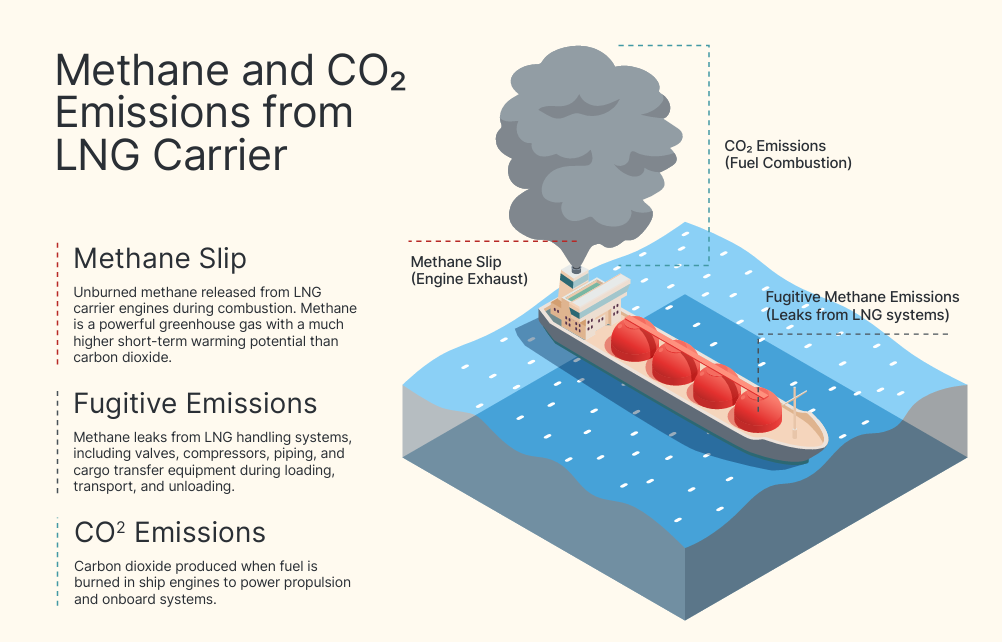
Despite shifting towards cleaner engine technologies, LNG-fueled ship engines are incredibly prone to methane slip, where fuel – namely methane, a greenhouse gas 80x more potent than CO2 – not burned during the combustion process leaks into the air alongside exhaust gases. In 2021, LNGCs accounted for 82% of methane emissions across the global shipping sector.
This is often accompanied by fugitive methane emissions leaking from onboard LNG infrastructure and during loading, unloading, and transport. While the significance of methane slip varies depending on engine technologies, these factors essentially debunk the industry argument framing LNG-fueled ship engines as more energy efficient.
Underwater Noise Pollution
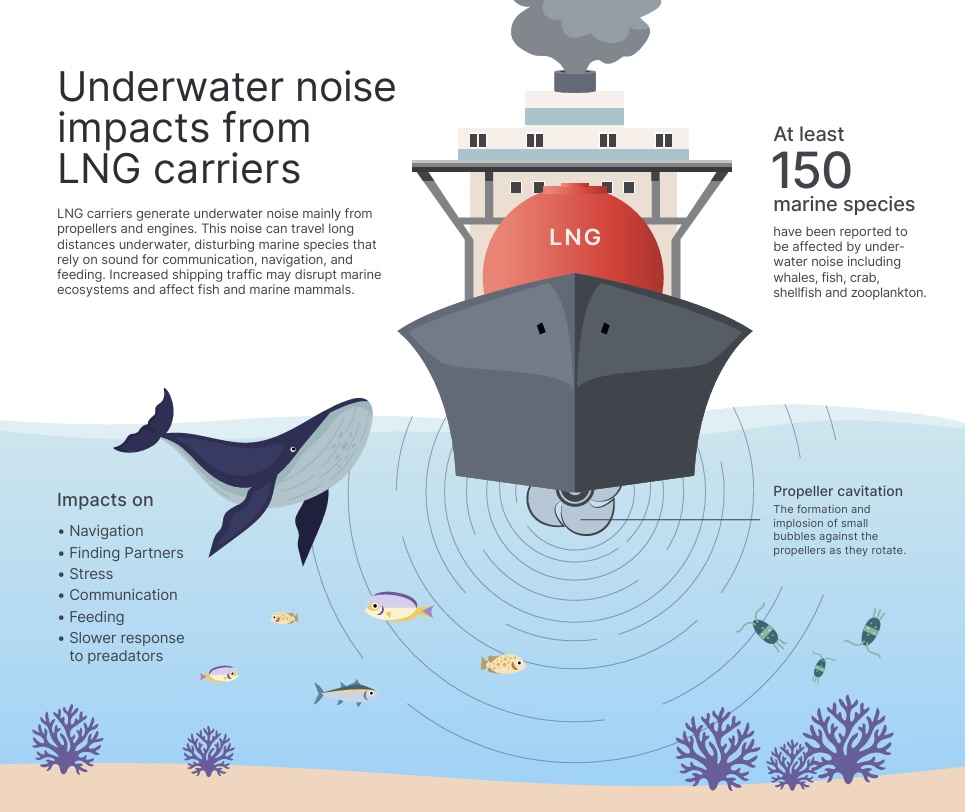
LNG carriers don’t move in silence. Like all large vessels, they produce underwater radiated noise coming from the ship's physical structure, machinery operation during navigation, and motion of the propellers. These far-travelling, low-frequency sounds often disrupt communication, navigation and even feeding and migration patterns among fish and marine mammals like whales and dolphins in affected areas like Southwest Louisiana. At least 150 marine species around the world have been found to have been affected by underwater noise.
Ballast Water Discharge and Invasive Species Introduction
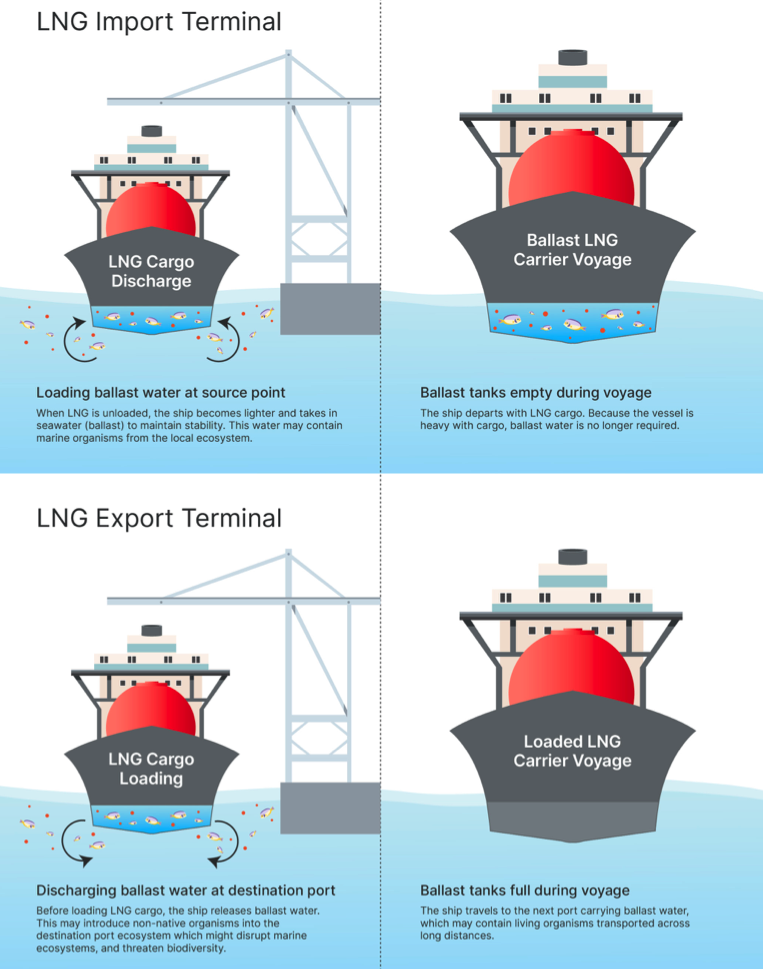
Large vessels like LNGCs regularly use ballast water, seawater pumped into onboard tanks in the lower part of a ship to maintain balance and stability when it is empty or only partially loaded. When LNGCs take on new cargo in the next port, this ballast water is discharged, and with it, thousands of aquatic animals, plants and microbes. When this discharged water is left untreated, these species are introduced and often become invasive to the local ecosystem.
Hundreds of such invasions have happened, with often dire consequences. Vibrio cholerae, the bacteria which causes cholera in humans, is one example. Cholera bacteria, especially in tropical climates, attach to small crustaceans and zooplankton as well as aquatic plants and shellfish, which are in turn swept up in ballast water collection and released in new areas when this water is released. Port areas close to river mouths are their main breeding site. Contaminated seafood and drinking water transmit these bacteria to humans, leading to cholera outbreaks like the South America epidemic in the early 1990s, which led to more than a million contracted cases and over 10 thousand deaths.
Collision Risks in Biodiversity-Rich Coastal Waters
LNGC shipping routes often cross through marine protected areas (MPAs), clearly outlined geographical spaces designed to protect and conserve critical marine ecosystems, habitats and species from the impacts of human activities like industrial fishing and maritime shipping. These designated regions, which include the Mozambique Channel, the Gulf of California and the Philippines’ Verde Island Passage (VIP), tend to be biodiversity hotspots and often double as a source of livelihood for local coastal communities.
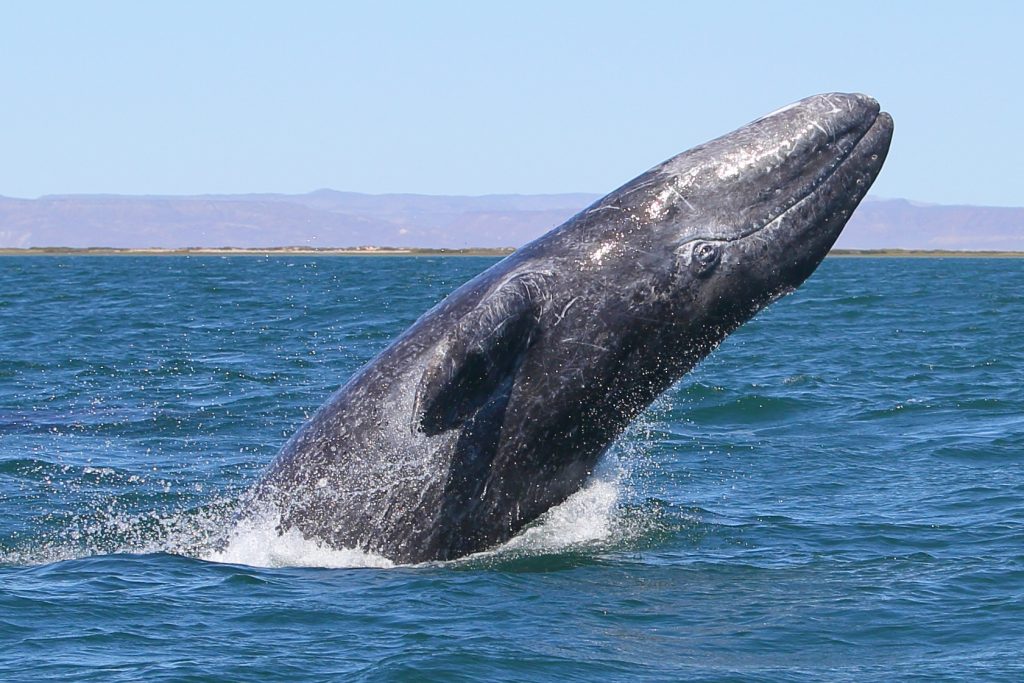
Beyond ballast water discharge and underwater noise, increased shipping traffic over the past decade – with some MPAs seeing up to 20 LNGCs in a single week – has significantly elevated the risk of ship-animal accidents. In 2024 alone, 128 LNGCs and crude oil tankers transited through the Bering Strait, up from only 14 in 2014. The Strait is one of the Arctic’s most important maritime seaways and a key migration area for species including gray whales, beluga, seals and several species of seabirds. Among these vessels, LNGCs were the fastest, traveling at an average speed of 15 knots – double that of the general cargo ships. Such speeds significantly increase the risks of collisions with marine mammals, often resulting in death or injury for the animal and potential infrastructural damage for the ship.
This increase in shipping traffic in the Bering Strait also causes light pollution, with vessel lights disorienting migrating bird species flying at low altitudes. Resulting collisions are particularly prevalent during fall, when daylight in the region diminishes.
The Social Toll of LNGCs: Cases from around the World
The environmental impacts of LNG shipping also harm people, with local communities living and working near LNG terminals being particularly vulnerable. In many cases, inadequate Free, Prior, and Informed Consent (FPIC) procedures have led to insufficient consultation and a lack of information shared with residents surrounding the potential impacts of LNGC expansion on the environment, local incomes, and even public health.
In the Philippines, LNGC traffic passing through the Verde Island Passage (VIP) has resulted in degraded water quality, declining fish stocks and reduced profits for local fishermen.
LNG infrastructure expansion also impacts residents’ health, notably increasing cardiovascular and respiratory disease risks originating from the release of harmful air pollutants like nitrogen oxide, carbon monoxide and particulate matter. This is the case in many regions like the U.S. Gulf South, where LNGCs are responsible for higher rates of asthma and cancer. Gulf South residents, many from already marginalized communities of color, continue to witness the destruction of local ecosystems and erasure of longstanding cultural practices due to insufficient due diligence on the part of LNGC stakeholders and financiers.
Similarly, these ships are substantially affecting the fishing stocks that Southwest Louisiana fishermen and their families rely on for their livelihoods. The huge ship wakes erode embankments, and fish catches consistently decrease. This reduces fishermen’s income, which has wider consequences for the entire community.
How Inadequate LNGC Environmental Impact Assessments are Fueling Destruction
Despite the scale and frequency of the aforementioned environmental impacts, LNGCs often remain excluded from environmental impact assessments (EIAs) on LNG projects, which are typically limited to onshore terminals. The LNG shipping phase, considered mobile on paper, is seen as beyond the assessment scope, leaving massive environmental governance loopholes behind. This regulatory gap emerges out of overly prescriptive interpretations of “project location” within LNGC financing structures. For instance, the Export-Import Bank of Korea (KEXIM), a major financier of the global LNG fleet, justifies the exemption of LNGC projects from EIA obligations on the basis of LNGCs lacking a fixed geographical site.
This logic begins to fall apart when examined alongside the OECD’s “Common Approaches” framework, which outlines the measures countries should take to assess and mitigate the environmental and social impacts of their export credits (i.e. overseas financing). The recommendation explicitly calls on countries to take action “addressing environmental and social issues relating to exports of capital goods (…) and the locations to which these are destined,” essentially debunking the “mobility” argument undergirding LNGC EIA exemption. As we have discussed, ports, marine protected areas, and coastal communities are all affected by LNGCs, and hence all fall within the EIA scope. Moreover, while LNGCs are undeniably mobile assets, they frequent fixed shipping routes and terminals, causing recurring and predictable impacts on specific marine and coastal ecosystems.
Awareness of Negative LNGC Impacts is Growing
Japanese Shipping Giants Face Civil Society Pressure Over Human Rights and Climate Concerns
Japanese shipping companies play a prominent role in the global LNG industry, controlling a considerable portion of the world’s LNGC fleet and contributing significantly to the sector’s emissions. Nippon Yusen Kaisha, K-Line, and Mitsui OSK Lines collectively own and operate 141 LNGCs worldwide, representing around 13% of LNGCs in service and making Japan the second-largest LNG shipowner country after Greece. Japan’s involvement throughout the LNG value chain – from production to transport – has earned it the nickname of a “global gas empire”.
In April 2025, a coalition of 74 civil society organizations (CSOs) issued letters requesting Japanese shipping companies and Korean shipbuilders to divest from the controversial TotalEnergies Mozambique LNG project in the African country’s northern region of Cabo Delgado, which has been plagued by social unrest and human rights violations.
The CSO letters target Japanese shipping giants Mitsui OSK Lines (planning to operate 5 vessels), K-Line (4 vessels), and Nippon Yusen Kaisha (4 vessels), as well as the Greek Shipowner Maran Gas Maritime (4 vessels). The letters also target Korean shipbuilders Hyundai Samho Heavy Industries and Samsung Heavy Industries, which will be constructing the vessels worth over USD 3 billion.
On top of enabling further human rights infringements, the CSOs emphasized the Mozambique LNG project’s heavy climate impacts. The 17 proposed vessels would generate around 6,288 million metric tons of CO₂e annually.
The Mozambique LNG project also threatens the unblemished marine environment communities depend on to meet basic needs. While the total extent of harm is yet to be thoroughly assessed, with the thousands of LNGC journeys expected throughout the project's lifespan, underwater noise pollution alone could dramatically hinder marine biodiversity.
OECD Complaint Filed Against Korean Public Financiers Over Lack of Environmental Impact Assessments for LNGCs
Early April 2026, Solutions for Our Climate (SFOC) filed a complaint to the Korean National Contact Point responsible for implementing the OECD Guidelines for Multinational Enterprises on the grounds of inadequate environmental and social due diligence from major LNGC financiers. The complaint marks a first in terms of holding public financial institutions accountable for their role in enabling environmental and social harm through LNGC financing.
Under the OECD Guidelines on Responsible Business Conduct, financial institutions are expected to identify and put measures in place to mitigate social and environmental risks linked to their investments. This includes biodiversity impacts, stranded asset risks, and greenhouse gas emissions.
The recent complaint targets three Korean public financial institutions: Korea Development Bank (KDB), Korea Trade Insurance Corporation, and the Export–Import Bank of Korea (KEXIM), which in the last decade alone provided over USD 27 billion in LNGC financing. It argues these players have failed to properly conduct comprehensive environmental and social due diligence prior to ship financing, especially due to a lack lifecycle climate impact assessments and cumulative supply chain risk evaluations.
This kind of long-term, minimally evaluated support contradicts climate goals and is often associated with unaddressed environmental and human rights impacts thousands of miles away.

LNGCs 101: More Reading
If you’ve reached the end of this blog and are hungry for more content, congratulations. We’ve reached the end of this LNGC-focused blog series under SFOC’s Explained column, shedding light on how public and private stakeholders keep the LNGC industry afloat amid growing climate and financial risks, with dire consequences for affected communities and ecosystems around the world. Thanks for reading along with us.
Curious to learn more? Check out these resources:
Explained – LNGCs 101
Explained: The Public Finance Mechanisms Keeping the LNG Carrier Industry Afloat
Explained: How Private Banks are Enabling LNG Carrier Expansion
SFOC Insights
Financing the Climate Crisis: South Korea’s Global Fossil Fuel Footprint
Retracing the Steps of the LNG Trade: Why Canada's First Nations Came to Korea
SFOC Research
An Assessment of Environmental and Social Impacts of LNG Carriers
The Changing Legal Landscape for LNG Shipping Expansion
No Room for More: Why LNG Carriers Are a Climate and Financial Risk
Related insights
Advancing the Transition Away from Fossil Fuels
Key Outcomes from Santa Marta
2026-05-29

Miles to be Heard by Those Who Never Had to Live Downstream: UBS's Exposure to Thai Energy Projects Flagged at the AGM
Thai villager carried years of struggle to UBS's doorstep.
2026-05-11
Explained: The Public Finance Mechanisms Keeping the LNG Carrier Industry Afloat
How Government Funds are De-risking LNGC Expansion
2026-04-02
Explained: How Private Banks are Enabling LNG Carrier Expansion
How finance, not demand, is keeping the LNG carrier industry afloat
2026-03-09

World Environment Day, June 5
#BeatPlasticPollution: A Climate Imperative
2025-06-05

Financing the Climate Crisis: South Korea’s Global Fossil Fuel Footprint
The Role of Public Financing Institutions in the Age of Climate Change
2025-06-04

Navigating the Blue Future: SFOC at the 2025 Our Ocean Conference
Busan, Korea (April 28 - 30, 2025)
2025-05-08

IMO Approves First-Ever Global Carbon Pricing for Shipping — But Is It Enough?
MEPC 83 Marks a New Era in Shipping Decarbonization, Yet Falls Short in Ambition
2025-04-25

Retracing the Steps of the LNG Trade: Why Canada's First Nations Came to Korea
The LNG Boom is "Good News"...for Whom?
2025-03-13

International Shipping Industry’s Passage to Net-Zero by 2050
What really happened at the MEPC 82?
2024-10-11

True Climate Impact of LNG Carriers
A comprehensive lifecycle emission analysis of LNG, enabled by LNG carriers
2024-10-11

Floating Pipelines Fuelling the Fossil Fuel Crisis: LNG Carriers
2024-09-01


